Carians

Definition and stakes

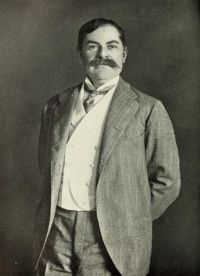
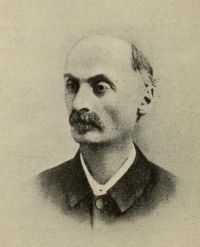
Portrait of Archibald Henry Sayce Archibald Henry Sayce,  1911 Encyclopædia Britannica (1911)

“ The country known as Caria was shared between the Carians proper and the Caunians, who were a wilder people, inhabiting the district between Caria and Lycia. They were not considered to be of the same blood as the Carians, and were, therefore, excluded from the temple of the Carian Zeus at Mylasa, which was common to the Carians, Lydians and Mysians, though their language was the same as that of the Carians proper. ”
Source: Wikisource

Emperor of the French Napoleon III,  History of Julius Cæsar, Vol. 1 of 2

“ Caria, Lycia, and Cilicia. XIV. On the southern coast of Asia Minor, some towns still sustained the rank they had attained one or two centuries before. The capital of Caria was Halicarnassus, a very strong town, defended by two citadels, [385] and celebrated for one of the finest works of Greek art, the Mausoleum. In spite of the extraordinary fertility of the country, the Carians were accustomed, like the people of Crete, to engage as mercenaries in the Greek armies. [386] On their territory stood the Ionian town of Miletus, with its four ports. ”
Source: Gutenberg

R. G. Latham,  Man and His Migrations

“ These do so. As many, however, of different nations (ἔθνος) as have become identical in language with the Carians do not do so.
And here comes a difficulty—one part of the facts connects, the other disconnects the Carians from the Lycians. The language goes one way, the customs another.
But this is not the only complication introduced by the Carian family. The whole question of their origin is difficult, and that of their affinities is equally so. It was from the islands to [240] the continent, rather than from the continent to the islands, that the Carians spread themselves
”
Source: Gutenberg

Get perspective with Kwize: daily news enlightened by great literature