Bengali

Definition and stakes

John Beames,  A Comparative Grammar of the Modern Aryan Languages of India Vol 1 (1872)

“ In the Bengali noun we have a purely inflectional genitive, the legitimate descendant of the Sanskrit termination -asya. Bengali and Oṛiya are like overgrown children, always returning to suck the mother’s breast, when they ought to be supporting themselves on other food. Consequently the written Bengali, afraid to enter boldly on the path of development, hugs the ancient Sanskrit forms as closely as it can, and misleads the reader by exhibiting as genuine Bengali what is merely a resuscitation of classical Sanskrit. ”
Source: Wikisource

Subal Chandra Mitra,  Isvar Chandra Vidyasagar, a story of his life and work (1902)

“ The Bengali language is, no doubt, under change, and there is no certainty what form it will ultimately take; but whatever shape it may take, it will always recall Vidyasagar with sentiments of profound veneration, and the writers of Bengali will ever be under a deep debt of obligation to him and pay homage to his feet, in as much as the Bengali language, however newly shaped, must bear some shade of the elegance and beauty of the great writer's style. ”
Source: Wikisource

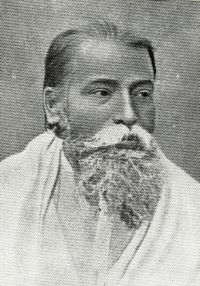
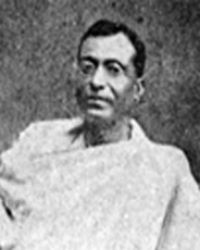
Portrait of Bijay Chandra Majumdar Bijay Chandra Majumdar,  The History of the Bengali Language (1920)

“ I proceed now to show from the history of evolution of our metrical system, that the accent system which now prevails, has been the accent system of the Bengali-speaking people, from the time about which faint sug­gestions can only be made, by taking a stand at the shadowy threshold of dim past. The history of the evolution of human institutions has made us familiar with this phenomenon, that our verse with our metrical system owes its origin to tribal festive songs, which in their turn originated from primitive expressions of emotions. ”
Source: Wikisource

Get perspective with Kwize: daily news enlightened by great literature