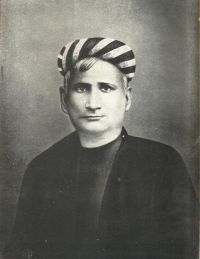
Bankim Chandra Chattopadhyay

Bankim Chandra Chattopadhyay

Summary

Portrait of Bankim Chandra Chattopadhyay Bankim Chandra Chattopadhyay Anandamath — Translator's Introduction (1941)

Both good fortune and bad fortune ever turn like the wheels of a cart. The man who sits on top of the world today may plunge into the deep tomorrow. But not for long. With the turn of the wheel he is on the top again.
India herself is today giving eloquent testimony to the truth enshrined in the old proverb. After centuries of political slavery, of social tyranny and of economic exploitation, the wheel of life in India is beginning to revolve again. And in the new awakening of a great nation, this prophetic novel from the pen of Bankim Chandra Chatterji has played a dynamic part.
Source: Wikisource

Portrait of Bankim Chandra Chattopadhyay Bankim Chandra Chattopadhyay Anandamath — Translator's Introduction (1941)

Within India herself a new feeling had been born; millions began to hold their heads high once again, and men began to talk in terms of ‘our language,' 'our literature,' and 'our country'.
Today in India the novelist Bankim Chandra Chatterji is known as the emperor of Bengali literature — Sahitya Samrat. He is recognised to be unquestionably India's greatest writer of prose, as Rabindranath Tagore is acknowledged to be her greatest lyrical poet. In fact, Tagore was Chatterji's literary disciple, owing much to the sympathy and kindness of the great master.
Source: Wikisource

Get perspective with Kwize: daily news enlightened by great literature