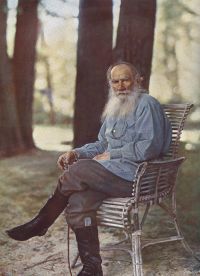
 Leo Tolstoy,
War and Peace
(1869)
“ “It is now today, and it will be tomorrow, and always; and there was yesterday, and the day before....” ”
The concept of "today" represents the present moment—a brief yet crucial point in time that writers have long explored. Leo Tolstoy contemplates its continuity, highlighting its unchanging nature across days, while Charles Wesley Naylor advocates for intentional engagement with the present as a moral duty.
Dale Carnegie elevates the day as the essence of life, underscoring its ability to influence memory and hope. Thomas Carlyle differentiates between passing externalities and an enduring inner self, and Newell Dwight Hillis portrays the present as a link between past accomplishments and future ambitions. These viewpoints together emphasize "today" as both a temporal reference point and a driver of human purpose.
Leo Tolstoy,
War and Peace
(1869)
“ “It is now today, and it will be tomorrow, and always; and there was yesterday, and the day before....” ”
Charles Wesley Naylor, Heart Talks
“ You will look back in time and eternity and see this day just as you lived it. Not only today, but every day, when it is today, holds [pg 278] the same momentous responsibility. Let us live today as faithful to God and man, as true, pure, just, and kind as we shall in the last day wish we had lived. Do not think that tomorrow you will live better, and be more kind and true and gentle. Today is your day; tomorrow is out of your reach. ”
A Course in Miracles: Workbook for Students…
“ Today, and for a number of days to follow, set aside ten to fifteen minutes for a more sustained practice period, in which you try to understand and accept what the idea for the day really means. Today's idea offers you escape from all your perceived difficulties. It places the key to the door of peace, which you have closed upon yourself, in your own hands. ”
Dale Carnegie, The Art of Public Speaking
“ Look to this day, for it is life—the very life of life. In its brief course lie all the verities and realities of your existence: the bliss of growth, the glory of action, the splendor of beauty. For yesterday is already a dream and tomorrow is only a vision; but today, well lived, makes every yesterday a dream of happiness and every tomorrow a vision of hope. ”
Thomas Carlyle, Sartor Resartus, and On Heroes… (1901)
“ the outer passes away, in swift endless changes; the inmost is the same yesterday, today and forever. ”
Newell Dwight Hillis, A Man's Value to Society: Studies in Self Culture and Character
“ It is the necessity of life for man to journey backward into the past for food and seed with which to sow the unconquered future. For each individual yesterday holds the beginnings of art and architecture. Yesterday holds the beginnings of reform and philanthropy. Yesterday contains the rise and victory of freedom. Yesterday holds the first schoolroom and college and library. Yesterday holds the cross and all its victories over ignorance and sin. Yesterday is a river pouring its rich floods forward, lending majesty and momentum to all man's enterprises. ”
 Holman Day,
The Ramrodders: A Novel
“ From the storied past, gentlemen of the convention, we draw precept and example, lesson and moral, hope and inspiration. As nature has stored in the bowels of the earth the oil that serves the lighthouse beacons of to-day, so life has stored in various reservoirs human experience that can light the path through troublous times in these latter days. Written on the scroll of history, limned on the page of law, we find the words of the fathers, sane and helpful thought and good counsel. In days of doubt and worry and despair we may meet the fathers on the written page. ”
P. L. Jacob, Military and religious life in the Middle Ages and at the period of the Renaissance (1870)
“ The emotions of the present may incline us to look back regretfully upon that past which reminds us of so much that is great and noble, in spite of its many and inevitable drawbacks, and which, by showing us the origin of modern society, by revealing to us the manner of its birth and its onward progress, may give us the key to its present critical condition when a profound and universal transformation seems about to take place. ”
 Woodrow Wilson,
The New Freedom
(1913)
“ We think of the future, not the past, as the more glorious time in comparison with which the present is nothing. Progress, development,—those are modern words. The modern idea is to leave the past and press onward to something new. ”
 Johann Gottlieb Fichte,
Characteristics of the Present Age
(1806)
“ In the preceding Lectures we have delineated the Present Age as a necessary part of the great World-Plan on which the Earthly Life of our Race is arranged, and have endeavoured to disclose its secret significance; we have sought to understand the phenomena of the Present by means of this Idea, to bring them forth as the necessary results of the Past, and to predict their immediate consequences in the Future;—and if we have succeeded in this our undertaking, we have then understood our Age. We have been engaged in these contemplations without thought of ourselves or of our own position. ”
 Alexander Maclaren,
Expositions of Holy Scripture
“ To-day is the child of all the yesterdays, and the yesterdays and to-day are the parent of tomorrow. The past, our past, has made us what we are in the present, and what we are in the present is making us what we shall be in the future. ”
Charles Morris, Famous Men and Great Events of the Nineteenth Century
“ As the procession of the years which form the most wonderful century of human history closes its solemn march, those who look on time as deriving its chief worth from its relations to eternity, and who estimate civilization as it bears upon the immortal character of man, will of necessity judge a century by its religious quality and results, asking: What place has religion held, what work has it wrought, what errors have weakened it, what are the tendencies which now dominate it, what are the opportunities which open before it? ”
 Effendi Shoghi,
The World Order of Bahá'u'lláh
“ Many a cause which past ages have regarded as purely visionary, yet in this day has become most easy and practicable. Why should this most great and lofty Cause—the day-star of the firmament of true civilization and the cause of the glory, the advancement, the well-being and the success of all humanity—be regarded as impossible of achievement? Surely the day will come when its beauteous light shall shed illumination upon the assemblage of man. ”
Robert E. Speer, The Stuff of Manhood: Some Needed Notes in American Character (1917)
“ It was the life of peace,—of the quiet agricultural people, of the tradespeople, of the homes, which is not written up in any history at all,—that was the real history of the world. The men and the women who were doing earth’s work were not those who went out to battle or on great expeditions, but those who, day by day, heroically, unflinchingly, and without fear of oblivion, did the real business of the world. ”
J. D. Buck, The New Avatar and The Destiny of the Soul
“ In tracing analogies through the history of the past, the conditions, premonitory, present, and subsequent to great world-movements have often been referred to.Nothing is more common or more patent than the oft-repeated saying, “This is the age of science.” 211 Any great movement that undertakes at the present day to deal with the deeper problems of individual and social life, must fit in and conform to the “spirit of the present age.” ”
 Theodore Parker,
Speeches, Addresses, and Occasional Sermons…
“ These subordinate peculiarities will depend first on the peculiar genius, idea and work of the nation, and next on the transient circumstances, geographical, climactic, historical and secular, to which the nation has been exposed. The past helped form the circumstances of the present age, and they the character of the men now living. ”
Leo Tolstoy,
A History of Yesterday
(1949)
“ I am writing a history of yesterday not because yesterday was extraordinary in any way, for it might rather be called ordinary, but because I have long wished to trace the intimate side of life through an entire day. Only God knows how many diverse and diverting impressions, together with the thoughts awakened by them, occur in a single day. ”
Effendi Shoghi,
Bahá'í Administration
“ You stand at this challenging hour in the history of the Cause at the threshold of a new era; the functions you are called upon to discharge are fraught with immense possibilities; the responsibilities you shoulder are grave and momentous; and the eyes of many peoples are turned, at this hour, towards you, expectant to behold the dawning of a Day that shall witness the fulfilment of His divine Promise. ”
J. D. Jones, The model prayer (1919)
“ The time is coming when trade and politics and pleasure shall be carried on to the glory of God. The time is coming when literature and art shall be cleansed of all impure taint, and shall speak of God as the Bible speaks of Him to-day. ”
 Brigham Young,
Journal of Discourses — Volume 2…
“ This morning we have assembled on one of the most solemn, interesting, joyful, and glorious occasions, that ever have transpired, or will transpire among the children of men, while the earth continues in its present organization, and is occupied for its present purposes. ”
Mary T. Longley, Life and labor in the spirit world (1885)
“ When shall the morning dawn that shall usher in a new day, a day of universal temperance and purity on earth? When shall the darkness break, and a new era of light, of knowledge and wisdom, come flooding in upon us? Not until man shall study the laws of his own being, and, so studying, learn to live in harmony with those laws. ”
Edith H. Allen, Home Missions in Action
“ To-day is your day and mine, the only day we have, the day in which we play our part. What our part may signify in the great whole we may not understand, but we are here to play it and now is the time. ”
James J. Walsh, Religion And Health
“ All these life-histories of countries and individuals stand spread out to God's eternal gaze. At each stage He sees the possibilities foreclosed or initiated; He influences development by the primal distribution in the past and by direction and inspiration in the present. ”
Caroline Cowles Richards, Village Life in America 1852-1872…
“ Those of us who lived in the latter half of the nineteenth century recall the swift transitions, the rapid march of science and various changes in social customs, and as we meet allusions to these in the leaves of the girl’s Diary we live our past over again with peculiar pleasure. ”
Dan King, Spiritualism Unmasked (1857)
“ To those who little paid little attention to history, the present appears to be an extraordinary age. They see progress inscribed upon everything. Nothing but the newest of the new gains favour with them. ”
Various, The Continental Monthly, Vol. 1…
“ The day is coming when the songs and sentences of this great struggle will be garnered up into literary treasuries, pass into household words, and confer honor on the children of those who penned them. Lay hand to the work, all you who have aught to say, aid us to become a medium for the time, and honor yourselves by your utterances. There are a thousand reforms, innumerable ideas fit for the day, ready to bloom forth. ”
 Eugène Sue,
The Pocket Bible; or, Christian the Printer…
“ The various springs from which human action flows, the various types which human crises produce, the virtues and the vices which great historic conflicts heat into activity—all these features of social motion, never jointly reproduced in works of history, are here drawn in vivid colors and present a historic canvas that is prime in the domain of literature. ”
 William Stubbs,
Seventeen lectures on the study of medieval and modern history and kindred subjects
(1886)
“ Modern History is the history of ourselves, of the way in which we came to be what we are, of the education of our nation, of the development of our government, of the fortunes of our fathers, that caused us to be taught and governed and placed as we are, and formed our minds and habits by that teaching, government, and position ”
Robert William Cole, The Struggle for Empire (1900)
“ Millions of human beings awoke to a new day of pleasure or labour, of joy or sorrow, but the brilliant King of Day ascended his appointed path through the sky unheeding and careless of the petty affairs of men. ”
 Daniel Webster,
Select Speeches of Daniel Webster…
“ But if our ancestors at the close of the first century could look back with joy and even admiration, at the progress of the country, what emotions must we not feel, when, from the point on which we stand, we also look back and run along the events of the century which has now closed! ”
Charles Morris, Famous Men and Great Events of the Nineteenth Century
“ After its long career of triumph and disaster, glory and shame, the world stands to-day at the end of an old and the beginning of a new century, looking forward with hope and backward with pride, for it has just completed the most wonderful hundred years it has ever known, and has laid a noble foundation for the twentieth century, now at its dawn. ”
 Lady Morgan,
The Missionary: An Indian Tale…
“ Time rolled on, and the majestic order of nature, uninterrupted in its harmonious course, finely contrasted the rapid vicissitudes of human events, and the countless changes in human institutions! In the short space of twenty years, the mighty had fallen, and the lowly were elevated ”
 John Timbs,
Knowledge for the Time
“ That the Past is the Guide for the Present is thus argued:—Every political treatise referring to events which have engrossed the attention of the day, either as modifications or as changes of our social system, must be valuable in later years. ”
Robert Hunt, The Poetry of Science; or, Studies of the Physical Phenomena of Nature
“ The past preaches to the present, and from its marvellous discourses we venture to infer something of the yet unveiled future. The forces which have worked still labour: the phenomena which they have produced will be repeated. ”
 H. G. Wells,
In the Days of the Comet
(1906)
“ We knew before the Change, the meanest knew, by glowing moments in ourselves and others, by histories and music and beautiful things, by heroic instances and splendid stories, how fine mankind could be, how fine almost any human being could upon occasion be ”
 Christmas Evans,
Sermons of Christmas Evans
“ It will supply the great mass of the public, who are at present almost necessarily in the dark as to the past world and its destinies, with a complete picture of all the great events relating to the world and to man, from the earliest dawn of history down to the present time ”
Walter Brown Murray, What Is The True Christian Religion… (1947)
“ This is a New Age; overwhelmingly and unmistakably new, shown in ten thousand ways. World changes have occurred of such a nature that no one can successfully question the advances of the last century and a half. ”
 F. Max Müller,
India: What can it teach us?
“ But whether on week-days or on Sundays, whether in youth or in old age, there are moments, rare though they be, yet for all that the most critical moments of our life, when the old simple questions of humanity return to us in all their intensity, and we ask ourselves, What are we? ”
 Bahá'u'lláh,
Gleanings from the Writings of Bahá'u'lláh
“ Verily I say, this is the Day in which mankind... Verily I say, this is the Day in which mankind can behold the Face, and hear the Voice, of the Promised One. The Call of God hath been raised, and the light of His countenance hath been lifted up upon men. It behoveth every man to blot out the trace of every idle word from the tablet of his heart, and to gaze, with an open and unbiased mind, on the signs of His Revelation, the proofs of His Mission, and the tokens of His glory. ”
 Evelyn Underhill,
The Life of the Spirit and the Life of To-day
“ It is, like the State, embodied history; and as such lives with its own life, a life transcending and embracing that of the individual souls of which it is built. And here, in its combined social and historic character, lie the sources alike of its enormous importance for human life and of its inevitable defects. ”
John Quincy Adams, Second State of the Union Address (1826)
“ Then, glancing through the same lapse of time, in the condition of the individuals we see the first day marked with the fullness and vigor of youth, in the pledge of their lives, their fortunes, and their sacred honor to the cause of freedom and of man-kind ”
 Daniel H. Wells,
Journal of Discourses — Volume 12…
“ The cause which we have espoused possesses, probably, to-day, a greater degree of prosperity than it has ever done from its commencement. Thus may it ever be from this time henceforth and for ever! From the commencement of this work until the present time we have continually increased in power and numbers, and in blessings from the Lord our God ”
 Fredrika Bremer,
The Homes of the New World
(1853)
“ And when people ask me what the people of the New World possess preferably to the Old, I reply, with the impression of that which I have seen and passed through in America fresh in my soul;—a warmer heart's pulse; a more energetic, a more vigorous youthful life. ”
 Ralph Waldo Emerson,
Miscellanies
(1855)
“ The Times, as we say—or the present aspects of our social state, the Laws, Divinity, Natural Science, Agriculture, Art, Trade, Letters, have their root in an invisible spiritual reality. To appear in these aspects, they must first exist, or have some necessary foundation. Beside all the small reasons we assign, there is a great reason for the existence of every extant fact ”
 Walter Besant,
As We Are and As We May Be
“ We are now witnessing one of the most remarkable, one of the most suggestive, signs of the time—a time which is, I verily believe, teeming with social mange—a time, as I have said above, of the most stupendous importance in the history of mankind. We read constantly, in the paper and everywhere, fears, prophecies, bogies of approaching revolution. ”
Edmondo De Amicis, Stories by Foreign Authors (1898)
“ Let us talk of our college days, of our travels, of war, of soldiers, and of Italy! XII. We old classmates will many of us doubtless live to see the twentieth century. Strange thought! I know, of course, that the transition from nineteen hundred to nineteen hundred and one will seem as natural as that from ninety-nine to a hundred, or from this year to next. And yet it seems to me that to see the first dawn of the new century will be like reaching the summit of some high mountain, and looking out over new countries and new horizons. ”
