“ If you are gay and jovial about it, if you feel no darts of torture flashing through be fastnesses of your life, do not flatter yourself that you are making radical changes. You are only pulling up pig-weed to set out smart-weed, and the less you say about it the better. Now Halicarnassus is really just as Orthodox as I. He would not lie or steal any quicker than I. He would not willingly sacrifice one jot or tittle of his faith, and yet he is always startling you with small heresies. He is like a calf tied to a tree in the orchard by a long rope. ”
Halicarnassus
Definition and stakes
Halicarnassus, an ancient city in Asia Minor, appears in literary and historical discussions as a symbol of cultural convergence and architectural splendor. From Herodotus, who was born there, to Dionysius of Halicarnassus, the city's influence extends across historiography and literary analysis.
Writers such as Gail Hamilton use it metaphorically, while Hogarth and Vitruvius emphasize its political and structural importance, particularly the Mausoleum. Mentions of its inclusion in the Delian League and its time under Persian rule highlight its strategic significance. Combining these viewpoints, Halicarnassus represents both a physical historical location and a symbol of intricate human achievements.
Quotes about “Halicarnassus”
Various, The Continental Monthly, Vol. 4…
“ Every house has its own Halicarnassus. He is a typal man, as is shown in the fact that husbands, brothers, sons, and lovers are constantly called 'Halicarnassus' by the ladies most closely associated with them. ”
Herodotus, The Boys' and Girls' Herodotus
“ During this year a stranger from Halicarnassus, in Asia Minor, after many years of travel in Asia, Scythia, Libya, Egypt, and Magna Græcia, has taken up his abode at Athens. He is still a young man, hardly thirty-seven, yet his fame is that of the first and greatest of historians. Dramatists and poets immortal there have been, but never man has written such exquisite prose. ”
 Vitruvius,
Ten Books on Architecture
(1914)
Vitruvius,
Ten Books on Architecture
(1914)
“ At Halicarnassus, the house of that most potent king Mausolus, though decorated throughout with Proconnesian marble, has walls built of brick which are to this day of extraordinary strength, and are covered with stucco so highly polished that they seem to be as glistening as glass. That king did not use brick from poverty; for he was choke-full of revenues, being ruler of all Caria. ”
 David George Hogarth,
1911 Encyclopædia Britannica, Volume 12…
(1911)
David George Hogarth,
1911 Encyclopædia Britannica, Volume 12…
(1911)
“ In the 5th century B.C. Halicarnassus and other Dorian cities of Asia were to some extent absorbed by the Delian League, but the peace of Antalcidas in 387 made them subservient to Persia; and it was under Mausolus, a Persian satrap who assumed independent authority, that Halicarnassus attained its highest prosperity. Struck by the natural strength and beauty of its position, Mausolus removed to Halicarnassus from Mylasa, increasing the population of the city by the inhabitants of six towns of the Leleges. ”
 George Saintsbury,
A history of criticism and literary taste in Europe…
(1902)
George Saintsbury,
A history of criticism and literary taste in Europe…
(1902)
“ Dionysius of Halicarnassus, Plutarch, and Dion Chrysostom, give us a good deal more material than we have yet had. But the results of the inspection of it are not wholly satisfactory. Dionysius of Halicarnassus is, as has been said, perhaps our typical specimen of the literary critic of antiquity. He has far less force and method and originality than Aristotle; but then he is a student confining himself to Rhetoric and History, not a world-philosopher, taking up the philosophy of literature merely as part of a whole. He has far less genius than Longinus ”
George Rawlinson and Edward Mewburn Walker, 1911 Encyclopædia Britannica, Volume 13… (1911)
“ HERODOTUS (c. 484–425 B.C.) , Greek historian, called the Father of History, was born at Halicarnassus in Asia Minor, then dependent upon the Persians, in or about the year 484 B.C. Herodotus was thus born a Persian subject, and such he continued until he was thirty or five-and-thirty years of age. At the time of his birth Halicarnassus was under the rule of a queen Artemisia (q.v.) . The year of her death is unknown; but she left her crown to her son Pisindelis (born about 498 B.C.) , who was succeeded upon the throne by his son Lygdamis about the time that Herodotus grew to manhood. ”
J. N. Larned, History for ready reference, Volumes 1 to 5 (1895)
“ From the islands, the Dorians spread to the mainland. The peninsula of Cnidus was perhaps the first settlement. ... Halicarnassus was founded from Troezen, and the Ionian element must have been considerable. ... Of the Dorian cities, six united in the common worship of Apollo on the headland of Triopium. These were Lindus, Ialysus, and Camirus in Rhodes, Cos, and, on the mainland, Halicarnassus and Cnidus. ... The territory which the Aeolians acquired is described by Herodotus as more fertile than that occupied by the Ionians, but of a less excellent climate. ”
David George Hogarth,
1911 Encyclopædia Britannica, Volume 12…
(1911)
“ Alexander, as soon as he had reduced Ionia, summoned Halicarnassus, where Memnon, the paramount satrap of Asia Minor, had taken refuge with the Persian fleet, to surrender; and on its refusal took the city after hard fighting and devastated it, but not being able to reduce the citadel, was forced to leave it blockaded. He handed the government of the city back to the family of Mausolus, as represented by Ada, sister of the latter. Not long afterwards we find the citizens receiving the present of a gymnasium from Ptolemy, and building in his honour a stoa or portico ”
The historians' history of the world in twenty-five volumes…
“ In either event it is held that he subsequently returned from Samos to Halicarnassus, and personally assisted in the overthrow of the tyrant Lygdamis. Even after this event, however, it would appear that Herodotus did not find Halicarnassus a satisfactory place of residence, as he subsequently migrated to the Greek colony of Thurii, in Italy, where his last days were spent, and where it is presumed he repolished and completed his history. The colony in Thurii was first established in the year 443, but whether or not Herodotus was a member of the first company that went out to it is in dispute ”
George Rawlinson and Edward Mewburn Walker, 1911 Encyclopædia Britannica, Volume 13… (1911)
“ Men were not men according to Greek notions unless they were citizens; and Herodotus, aware of this, probably sharing in the feeling, was anxious, having lost his political status at Halicarnassus, to obtain such status elsewhere. At Athens the franchise, jealously guarded at this period, was not to be attained without great expense and difficulty. ”
 Diodorus Siculus,
The Historical Library of Diodorus the Sicilian…
(1814)
Diodorus Siculus,
The Historical Library of Diodorus the Sicilian…
(1814)
“ And besides, Theramenes, one of the greatest authority in the commonwealth, a man eminent for wisdom and prudence as ever any before him, advised the recalling of Alcibiades. When the messengers returned to Samos with this account, Alcibiades joining nine ships more to those thirteen be brought with him, sailed to Halicarnassus, and there forced the city to pay him a large sum of money. ”
 Plutarch,
Parallel Lives
(c. 100 AD)
Plutarch,
Parallel Lives
(c. 100 AD)
“ At the same time he made an agreement with the Corinthians, that they should allow those that came from Athens to the celebration of the Isthmian games as much space of honor before the rest to behold the spectacle in, as the sail of the ship that brought them thither, stretched to its full extent, could cover; so Hellanicus and Andro of Halicarnassus have established. Concerning his voyage into the Euxine Sea, Philochorus and some others write that he made it with Hercules, offering him his service in the war against the Amazons, and had Antiope given him for the reward of his valor ”
Livy, The History of Rome, Books 37 to the End
“ The negligence which Pausistratus heard that Polyxenidas was about to use in his fleet, he himself immediately practised. Part of his ships he sent to Halicarnassus to bring provisions, another part to the city of Samos, while he himself waited at Panormus, that he might be ready when he should receive the signal of attack from the traitor. Polyxenidas encouraged his mistake by counterfeiting neglect; hauled up some ships, and, as if he intended to haul up others, put the docks in repair; he did not call the rowers from their winter quarters to Ephesus, but assembled them secretly at Magnesia. ”
“ She was ruler of the men of Halicarnassus, Cos, Nisyrus, and Calynda, furnishing five ships, and she furnished ships which were of all the fleet reputed the best after those of the Sidonians; and of all his allies she set forth the best counsels to the king. ”
Herodotus, The Boys' and Girls' Herodotus
“ Her husband was dead, but, holding the sovereignty while her son was under age, she joined the expedition from a feeling of courage and manly spirit, though there was no necessity for her doing so. Her name was Artemisia, and she was the daughter of Lygdamis, by birth of Halicarnassus on her father's side, and on her mother's a Cretan. She commanded the Halicarnassians, the Coans, the Nisyrians, and the Calyndians, having contributed five ships: and of the whole fleet, next to the Sidonians, she furnished the most renowned ships, and of all the allies, gave the best advice to the king. ”
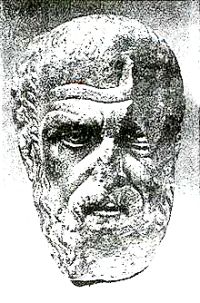 Arrian,
The Anabasis of Alexander — Chapter XX
(1884)
Arrian,
The Anabasis of Alexander — Chapter XX
(1884)
“ But the men in the city stoutly defending themselves, and at the same time many from Halicarnassus having already come to their aid by sea, made it impossible for Alexander to capture Myndus by surprise or sudden assault. ”
William Gordon Perrin, British Flags: Their Early History…
“ Of Artemisia, queen of Halicarnassus, who accompanied Xerxes in his expedition against Greece and fought on the Persian side at the Battle of Salamis (480 b.c.) , Polyaenus, in his Strategemata, relates that she had two semeia, one of "barbarian" form, the other Greek. When she was pursuing a Greek ship she raised aloft the barbarian [9] standard [17] , but when fleeing before a Greek ship she raised the Greek standard, so that her pursuer took her ship for Greek and kept off from it. ”
Thomas Wilhelm, A Military Dictionary and Gazetteer
“ Half-sunken Battery. See Battery.Half-sword. A fight within half the length of a sword; a close fight.Haliartus (now Mazi) . An ancient town in Bœtia, on the south of the Lake Copais. It was destroyed by Xerxes in his invasion of Greece, 480 B.C., but was rebuilt, and appears as an important place in the Peloponnesian war. Under its walls Lysander lost his life, 395; it was destroyed by the Romans (171) because it supported Perseus, king of Macedonia, and its territory was given to the Athenians.Halicarnassus (now Boudroum) . A Greek city of Asia Minor, situated on the Ceramian Gulf. ”
Various, The Girl's Own Paper, Vol. VIII, No…
“ Those who are acquainted with the classics will find many references to the use of heraldic emblems before that use was reduced to a complete and perfect science. According to Herodotus, the Carians were the first who put crests upon their helmets and sculptured devices on their shields. These Carians inhabited a country in the south-west angle of Asia Minor, of which Halicarnassus was the capital and Miletus its rival—both famous cities of antiquity. ”
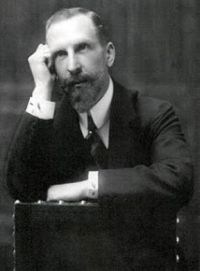 Franz Cumont,
The Oriental Religions in Roman Paganism
Franz Cumont,
The Oriental Religions in Roman Paganism
“ At Antioch, Seleucus Callinicus built a sanctuary for the statue of Isis sent to him from Memphis by Ptolemy Euergetes. [14] In token of his friendship Ptolemy Soter introduced his god Serapis into Athens, where the latter had a temple at the foot of the Acropolis [15] ever after, and Arsinoë, his mother or wife, founded another at Halicarnassus, about the year 307. [16] In this manner the political activity of the Egyptian dynasty was directed toward having the divinities, whose glory was in a certain measure connected with that of their house, recognized everywhere. ”
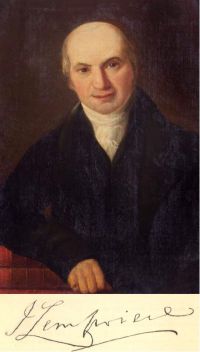 John Lemprière,
A classical dictionary
(1904)
John Lemprière,
A classical dictionary
(1904)
“ The best editions of his history are that of Politian, 4to, Dovan, 1525, who afterwards published a very valuable Latin translation, and that of Oxford, 8vo, 1708. Herodicus, a physician surnamed Gymnastic, who flourished B.C. 443.――A grammarian surnamed Crateleus, B.C. 123. Hērŏdŏtus, a celebrated historian of Halicarnassus, whose father’s name was Lyxes, and that of his mother Dryo. He fled to Samos when his country laboured under the oppressive tyranny of Lygdamis, and travelled over Egypt, Italy, and all Greece. He afterwards returned to Halicarnassus, and expelled the tyrant ”
Arrian,
The Anabasis of Alexander
“ They were, however, easily repelled and shut up again within the walls by the Macedonians who were guarding the engines, and by others who were aroused by the noise of61 the struggle and who came to their aid. Neoptolemus, the brother of Arrhabaeus, son of Amyntas, one of those who had deserted to Darius, was killed, with about 170 others of the enemy. Of Alexander’s soldiers sixteen were killed and 300 wounded; for the sally being made in the night, they were less able to guard themselves from being wounded. CHAPTER XXI. Siege of Halicarnassus. ”
Arrian,
The Anabasis of Alexander
“ The city narrowly escaped capture; indeed it would have been taken, had not Alexander called back his army, to see if some friendly sign of surrender would be made by the Halicarnassians; for he was still desirous of saving their city. Of the men in the city about one thousand were slain; and of Alexander’s men about forty, among whom were Ptolemy, one of the king’s body-guards, Clearchus, a captain of the archers, Addaeus, who had the command of a thousand infantry, and other Macedonians of no mean position.171 CHAPTER XXIII. Destruction of Halicarnassus.—Ada, Queen of Caria. ”
G. Maspero, History of Egypt, Chaldæa, Syria…
“ He, doubtless, allowed a queen-regent of the earth to share his throne,* but Sauazios, another, and, at first, less venerable deity had thrown this august pair into the shade. * The existence of such a goddess may be deduced from the passage in which Dionysius of Halicarnassus states that Manes, first king of the Phrygians, was the son of Zeus and Demeter. Drawn by Faucher-Gudin, from a photograph by Perdrizet. The last figure on the left is the god Men; the Sun overlooks all the rest, and a god bearing an axe occupies the extreme right of the picture. ”
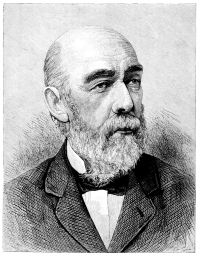 James Fergusson,
The Mausoleum at Halicarnassus Restored in Conformity With the Recently Discovered Remains
James Fergusson,
The Mausoleum at Halicarnassus Restored in Conformity With the Recently Discovered Remains
“ All this does not, it is true, prove that the Babylonian cubit was used in Caria; but it makes it so probable that it may have been that there will be nothing shocking in calling the length of the longer step by this name; and as this measure was the modulus of the whole building, and occurs over and over again, it will be convenient, and avoid circumlocution, if—of course, 22without prejudging the fact—we call the measure of 21 Greek inches as equal to 1 Babylonian or Halicarnassean cubit. ”
Strabo, The Geography of Strabo, Volume 3…
“ Mankind, enervated by luxury, impute the blame of its effects to different kinds of air and water, but these are not the causes of luxury, but riches and intemperance.There is an acropolis at Halicarnasus. In front of it lies Arconnesus.161 It had, among others, as its founders, Anthes and a body of Trœzenians.162Among the natives of Halicarnasus were Herodotus the historian, who was afterwards called Thurius, because he was concerned in sending out the colony to Thurii; Heracleitus the poet, the friend of Callimachus; and in our time, Dionysius the historian. ”

“ And when, in the great equinoctial storm of the previous year, three giant oaks lay shattered and broken, the sight had caused her deep grief, until she wove a legend about them and turned them into monsters for Perseus to subdue with Medusa's head. One, indeed, whose trunk was gnarled and twisted, became the serpent of the brazen scales who sleepeth not, guarding the Golden Fleece."As the tree falls so shall it lie," seemed to be the motto of La Sarthe Chase. For none were removed.Halcyone stretched out her arms and beckoned to her fairy friends. ”
 Charles Lamb,
Tales from Shakespeare
Charles Lamb,
Tales from Shakespeare
“ O come hither, thou that wast born at sea, buried at Tarsus, and found at sea again. O Helicanus, down on your knees, thank the holy gods! This is Marina. Now blessings on thee, my child! Give me fresh garments, mine own Helicanus! She is not dead at Tarsus as she should have been by the savage Dionysia. She shall tell you all, when you shall kneel to her and call her your very princess. Who is this?" (observing Lysimachus for the first time) . "Sir," said Helicanus, "it is the governor of Mitylene, who, hearing of your melancholy, came to see you." "I embrace you, sir," said Pericles. ”
Mary Lamb, Tales from Shakespeare — Pericles… (1908)
“ In Helicanus we have beheld a notable pattern of truth, of faith, and loyalty, who, when he might have succeeded to a throne, chose rather to recall the rightful owner to his possession, than to become great by another's wrong. In the worthy Cerimon, who restored Thaisa to life, we are instructed how goodness directed by knowledge, in bestowing benefits upon mankind, approaches to the nature of the gods. ”
 Nathaniel Hawthorne,
A Wonder Book
(1922)
Nathaniel Hawthorne,
A Wonder Book
(1922)
“ As quick as thought, he snatched it up, with the snakes still writhing upon it, and thrust it in. ‘Your task is done,’ said the calm voice. ‘Now fly; for the other Gorgons will do their utmost to take vengeance for Medusa’s death.’ It was, indeed, necessary to take flight; for Perseus had not done the deed so quietly but that the clash of his sword, and the hissing of the snakes, and the thump of Medusa’s head as it tumbled upon the sea-beaten sand, awoke the other two monsters. ”
