Summary

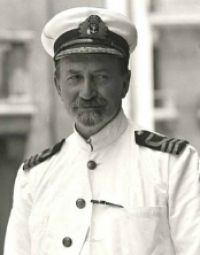
Portrait of David George Hogarth David George Hogarth 1911 Encyclopædia Britannica, Volume 12… (1911)

On this apex stood the chariot with the figure of Mausolus himself and an attendant. The height of the statue of Mausolus in the British Museum is 9 ft. 91/2 in. without the plinth. The hair rising from the forehead falls in thick waves on each side of the face and descends nearly to the shoulder; the beard is short and close, the face square and massive, the eyes deep set under overhanging brows, the mouth well formed with settled calm about the lips.
Source: Wikisource

Portrait of David George Hogarth David George Hogarth 1911 Encyclopædia Britannica, Volume 12… (1911)

In the 5th century B.C. Halicarnassus and other Dorian cities of Asia were to some extent absorbed by the Delian League, but the peace of Antalcidas in 387 made them subservient to Persia; and it was under Mausolus, a Persian satrap who assumed independent authority, that Halicarnassus attained its highest prosperity. Struck by the natural strength and beauty of its position, Mausolus removed to Halicarnassus from Mylasa, increasing the population of the city by the inhabitants of six towns of the Leleges.
Source: Wikisource

Portrait of David George Hogarth David George Hogarth 1911 Encyclopædia Britannica, Volume 12… (1911)

Alexander, as soon as he had reduced Ionia, summoned Halicarnassus, where Memnon, the paramount satrap of Asia Minor, had taken refuge with the Persian fleet, to surrender; and on its refusal took the city after hard fighting and devastated it, but not being able to reduce the citadel, was forced to leave it blockaded. He handed the government of the city back to the family of Mausolus, as represented by Ada, sister of the latter. Not long afterwards we find the citizens receiving the present of a gymnasium from Ptolemy, and building in his honour a stoa or portico
Source: Wikisource

Get perspective with Kwize: daily news enlightened by great literature