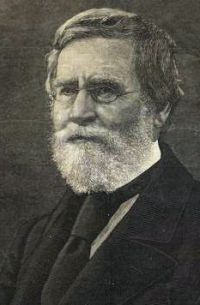
George Carless Swayne

Biographical details

George Carless Swayne,  Once a Week (1863)

“ The view from the castle of Miltenberg is one of the most delightful that can be conceived; the river comes to the town in the shape of a horse-shoe. The forms of the hills are seen in profile. The old fortifications wind up the slopes round the castle with towers at intervals, like those of Bellinzona in Italian Switzerland. Miltenberg is certainly the eye and gem of the Main.
About an hour’s walk from Miltenberg on the other side of the Mud, which is, notwithstanding its name, a tolerably clear stream, is the long straggling village of Klein-Henbach.
”
Source: Wikisource

George Carless Swayne,  Herodotus (1870)

“ His ethical portraits are above all invaluable, and, however fabulous the circumstances with which they are connected, must have been true to the life, from their evidently undesigned consistency. The benignant and vain Crœsus, the ambitious Cyrus, the truculent Cambyses, the chivalrous yet calculating Darius, the wild Cleomenes, the wise and wary Themistocles, the frantic Xerxes—the very type of the infatuation by which the divine vengeance wrought—these, and a host of other portraits of living men, can only be compared in their verisimilitude with the immortal creations of Shakespeare. ”
Source: Wikisource

George Carless Swayne,  Once a Week (1863)

“ The valley behind Trarbach is rich in magnificent rock and wood scenery, as are also its two branches, which lose themselves in the upland. September is surely the time to see the Moselle. The air is still, the sun is but lukewarm, the lights are exquisite, the colours of the foliage range through every variety of green, and yellow, and pink, and russet, and brown. The only drawback is the shortness of the days, still shorter in the depth of the gorge, from which the hills shut out the last smiles of the sun. ”
Source: Wikisource

Get perspective with Kwize: daily news enlightened by great literature