“ Androgeos' death, and off'rings to his ghost; Sev'n youths from Athens yearly sent, to meet The fate appointed by revengeful Crete. And next to those the dreadful urn was plac'd, In which the destin'd names by lots were cast: The mournful parents stand around in tears, And rising Crete against their shore appears. There too, in living sculpture, might be seen The mad affection of the Cretan queen; Then how she cheats her bellowing lover's eye; The rushing leap, the doubtful progeny, The lower part a beast, a man above, The monument of their polluted love. ”
Crete
Definition and stakes
Crete, the largest Greek island, has shaped Mediterranean history as the cradle of the Minoan civilization and a meeting point of cultures. From Virgil’s mythologized landscapes to Stobart’s strategic geography, authors have long celebrated its rugged beauty and ancient heritage.
Buckley evokes its mythical past, while Clodd and Baikie highlight its role as a link between Egypt and Europe. These perspectives converge on Crete as a timeless symbol of cultural convergence and historical richness.
Quotes about “Crete”
E. F. Buckley, Children of the Dawn : Old Tales of Greece
“ IN the blue waters of the Ægean Sea, midway between Greece and Egypt, lies the fertile land of Crete. Here, long, long ago, when the gods still walked on earth in human form and the sons of men were as children playing in a fair garden, there ruled a king who was the father of three lovely daughters. They lived in a palace in the rich Omphalian plain, beneath the shade of snow-capped Ida, surrounded by smiling gardens and fruitful vineyards, with a glimpse, away to the southward, of the sparkling Mediterranean Sea. ”
J. C. Stobart, The Glory That Was Greece: a survey of Hellenic culture and civilisation
“ Thus geography has made it exceedingly probable that Crete will play a momentous part in the earliest history of Europe. That island lies like a doorstep at the threshold of Europe. If civilisation was to rise with the sun in the East, out of the extremely ancient civilisations of Egypt and Babylon, by way of those earliest carriers to the world’s markets, the Phœnicians of Tyre and Sidon, clearly this island{15} of Crete would be their stepping-stone to Europe. Thus we reason, knowing it to be the truth. But we should never have learnt the truth from literature. ”





Related terms
Authors who wrote about “Crete”
George GlasgowJames BaikieArthur J. Evans, John H. Freese… William James StillmanHarold BayleyWilliam Miller
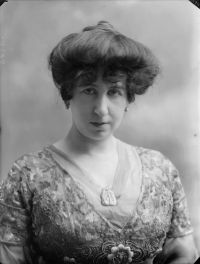 Annie Vivanti
 Virgil
 Edward CloddPhilip Sanford Marden
 Ellen Churchill SempleJ. A. K. Thomson
 ArrianDorothy MillsProject GutenbergJ. C. Stobart
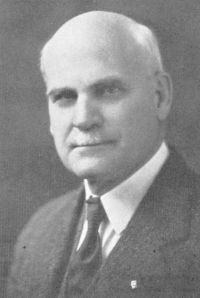 Frank Justus Miller
 Charles KingsleyVariousE. F. Buckley
William James StillmanHarold BayleyWilliam MillerAnnie VivantiVirgilEdward CloddPhilip Sanford MardenEllen Churchill SempleJ. A. K. ThomsonArrianDorothy MillsProject GutenbergJ. C. StobartFrank Justus MillerCharles KingsleyVariousE. F. Buckley