“ My shining armor and my Trojan shield, Astonish'd at the sight, the vital heat Forsakes her limbs; her veins no longer beat: She faints, she falls, and scarce recov'ring strength, Thus, with a falt'ring tongue, she speaks at length: "'Are you alive, O goddess-born?' she said, 'Or if a ghost, then where is Hector's shade?' At this, she cast a loud and frightful cry. With broken words I made this brief reply: 'All of me that remains appears in sight; I live, if living be to loathe the light. No phantom; but I drag a wretched life, My fate resembling that of Hector's wife. ”
Virgil
Biographical details
.jpg)
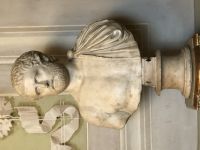
Virgil, a Roman poet of the Augustan period (1st century BC), is celebrated as one of the most influential figures in Latin literature, famed for his epic Aeneid, pastoral Eclogues, and didactic Georgics. His work interweaves themes of fate, human endeavor, and the natural world, reflecting both the political spirit of Rome and the eternal human experience.
Virgil’s command of poetic structure and his fusion of myth with history cemented his legacy, earning him admiration from contemporaries like Dante and Chaucer, who regarded him as a foundational figure in literature. His writings, combining refinement with deep philosophical reflection, remain essential to grasping the lasting impact of classical literature.
Quotes by Virgil
 Virgil,
The Æneids of Virgil, Done into English Verse
Virgil,
The Æneids of Virgil, Done into English Verse
“ Shared blood of this Italian land: but thee the Fates endow With years and race full meet hereto; the Gods call on thee now. Go forth, O captain valorous of Italy and Troy. Yea, I will give thee Pallas here, my hope and darling joy, And bid him 'neath thy mastery learn in battle to be bold, And win the heavy work of Mars, and all thy deeds behold; And, wondering at thy valiancy, win through his earliest years. Two hundred knights of Arcady, the bloom of all it bears, I give thee; in his own name, too, like host shall Pallas bring. ”
“ And as in sleep, when nightly rest weighs down our languorous eyes, we seem vainly to will to run eagerly on, and sink faint amidst our struggles; the tongue is powerless, the familiar strength fails the body, nor will words or utterance follow: so the disastrous goddess brings to naught all Turnus' valour as he presses on. His heart wavers in shifting emotion; he gazes on his Rutulians and on the city, and falters in terror, and shudders at the imminent spear; neither sees he whither he may escape nor how rush violently on the enemy, and nowhere his chariot or his sister at the reins. ”
“ To Trojan guests; lest, ignorant of fate, The queen might force them from her town and state. Down from the steep of heav’n Cyllenius flies, And cleaves with all his wings the yielding skies. Soon on the Libyan shore descends the god, Performs his message, and displays his rod: The surly murmurs of the people cease; And, as the fates requir’d, they give the peace: The queen herself suspends the rigid laws, The Trojans pities, and protects their cause. Meantime, in shades of night Aeneas lies: Care seiz’d his soul, and sleep forsook his eyes. ”
Virgil,
Aeneid — Book X
(1697)
“ My dying son contracted no such band; The gift is hateful from his murd'rer's hand. For this, this only favor let me sue, If pity can to conquer'd foes be due: Refuse it not; but let my body have The last retreat of humankind, a grave. Too well I know th' insulting people's hate; Protect me from their vengeance after fate: This refuge for my poor remains provide, And lay my much-lov'd Lausus by my side." He said, and to the sword his throat applied. The crimson stream distain'd his arms around, And the disdainful soul came rushing thro' the wound. ”
Virgil,
The Works of Virgil (Dryden)/Aeneid…
(1697)
“ No labors exercise the youthful band, Nor use of arts, nor toils of arms they know; The mole is left unfinish'd to the foe; The mounds, the works, the walls, neglected lie, Short of their promis'd heighth, that seem'd to threat the sky, But when imperial Juno, from above, Saw Dido fetter'd in the chains of love, Hot with the venom which her veins inflam'd, And by no sense of shame to be reclaim'd, With soothing words to Venus she begun: "High praises, endless honors, you have won, And mighty trophies, with your worthy son! Two gods a silly woman have undone! ”
Virgil,
Aeneid — Book III
(1697)
“ We pray; we cast the lots, and then surround The monstrous body, stretch'd along the ground: Each, as he could approach him, lends a hand To bore his eyeball with a flaming brand. Beneath his frowning forehead lay his eye; For only one did the vast frame supply— But that a globe so large, his front it fill'd, Like the sun's disk or like a Grecian shield. The stroke succeeds; and down the pupil bends: This vengeance follow'd for our slaughter'd friends. But haste, unhappy wretches, haste to fly! Your cables cut, and on your oars rely! ”
Virgil,
The Works of Virgil (Dryden)/Aeneid…
(1697)
“ To Hercules, the warrior son of Jove. Thick clouds of rolling smoke involve the skies, And fat of entrails on his altar fries. But, when they saw the ships that stemm'd the flood, And glitter'd thro' the covert of the wood, They rose with fear, and left th' unfinish'd feast, Till dauntless Pallas reassur'd the rest To pay the rites. Himself without delay A jav'lin seiz'd, and singly took his way; Then gain'd a rising ground, and call'd from far: "Resolve me, strangers, whence, and what you are; Your bus'ness here; and bring you peace or war?" ”
“ His glitt'ring helm, which terribly was grac'd With waving horsehair, nodding from afar; Then spurr'd his thund'ring steed amidst the war. Love, anguish, wrath, and grief, to madness wrought, Despair, and secret shame, and conscious thought Of inborn worth, his lab'ring soul oppress'd, Roll'd in his eyes, and rag'd within his breast. Then loud he call'd Aeneas thrice by name: The loud repeated voice to glad Aeneas came. "Great Jove," he said, "and the far-shooting god, Inspire thy mind to make thy challenge good!" ”
Virgil,
The Æneids of Virgil, Done into English Verse
“ Fame went that Duke Idomeneus, thrust from his fathers' land, Had gone his ways, and desert now was all the Cretan strand, That left all void of foes to us those habitations lie. Ortygia's haven then we leave, and o'er the sea we fly By Naxos of the Bacchus ridge, Donusa's green-hued steep, And Olearon, and Paros white, and scattered o'er the deep All Cyclades; we skim the straits besprent with many a folk; And diverse clamour mid the ships seafarers striving woke; Each eggs his fellow; On for Crete, and sires of time agone! ”
“ In war is no safety; peace we all implore of thee, O Turnus, and the one pledge that makes peace inviolable. I the first, I whom thou picturest thine enemy, as I care not if I am, see, I bow at thy feet. Pity thine allies; relent, and retire before thy conqueror. Enough have we seen of rout and death, and desolation over our broad lands. Or if glory stir thee, if such strength kindle in thy breast, and if a palace so delight thee for thy dower, be bold, and advance stout-hearted upon the foe. ”
“ With wonder, as they went, the troops were fill’d, To see such numbers whom so few had kill’d. Serranus, Rhamnes, and the rest, they found: Vast crowds the dying and the dead surround; And the yet reeking blood o’erflows the ground. All knew the helmet which Messapus lost, But mourn’d a purchase that so dear had cost. Now rose the ruddy morn from Tithon’s bed, And with the dawn of day the skies o’erspread; Nor long the sun his daily course withheld, But added colours to the world reveal’d: When early Turnus, wak’ning with the light, All clad in armour, calls his troops to fight. ”
“ And first the footsteps of a god he found. "Arms! arms!" he cries; "the sword and shield prepare, And send the willing chief, renew'd, to war. This is no mortal work, no cure of mine, Nor art's effect, but done by hands divine. Some god our general to the battle sends; Some god preserves his life for greater ends." The hero arms in haste; his hands infold His thighs with cuishes of refulgent gold: Inflam'd to fight, and rushing to the field, That hand sustaining the celestial shield, This gripes the lance, and with such vigor shakes, That to the rest the beamy weapon quakes. ”
Virgil,
The Æneids of Virgil, Done into English Verse
“ This sin alone of all belike my falling heart might trap; For, Anna, I confess it thee, since poor Sychæus' hap,20 My husband dead, my hearth acold through murderous brother's deed, This one alone hath touched the quick; this one my heart may lead Unto its fall: I feel the signs of fire of long agone. And yet I pray the deeps of earth beneath my feet may yawn, I pray the Father send me down bolt-smitten to the shades, The pallid shades of Erebus, the night that never fades, Before, O Shame, I shame thy face, or loose what thou hast tied! ”
“ Thy troops shall reach, but, having reach’d, repent. Wars, horrid wars, I view; a field of blood, And Tiber rolling with a purple flood. Simois nor Xanthus shall be wanting there: A new Achilles shall in arms appear, And he, too, goddess-born. Fierce Juno’s hate, Added to hostile force, shall urge thy fate. To what strange nations shalt not thou resort, Driv’n to solicit aid at ev’ry court! The cause the same which Ilium once oppress’d; A foreign mistress, and a foreign guest. But thou, secure of soul, unbent with woes, The more thy fortune frowns, the more oppose. ”
“ The Fire-god rages with loose rein over thwarts and oars and hulls of painted fir. Eumelus carries the news of the burning ships to the grave of Anchises and the ranges of the theatre; and looking back, their own eyes see the floating cloud of dark ashes. And in a moment Ascanius, as he rode gaily before his cavalry, spurred his horse to the disordered camp; nor can his breathless guardians hold him back. 'What strange madness is this?' he cries; 'whither now hasten you, whither, alas and woe! O citizens? not on the foe nor on some hostile Argive camp; it is your own hopes you burn. ”
“ The fate of arms, resolv'd in fight to die: 'What hope remains, but what my death must give? Can I, without so dear a father, live? You term it prudence, what I baseness call: Could such a word from such a parent fall? If Fortune please, and so the gods ordain, That nothing should of ruin'd Troy remain, And you conspire with Fortune to be slain, The way to death is wide, th' approaches near: For soon relentless Pyrrhus will appear, Reeking with Priam's blood- the wretch who slew The son (inhuman) in the father's view, And then the sire himself to the dire altar drew. ”
Virgil,
The Æneids of Virgil, Done into English Verse
“ We will go seek Æneas now and Pallanteum's wall:240 Ye shall behold him and his spoils from mighty victory wrought Come hither presently: the way shall fail our feet in nought, For we have seen the city's skirts amid the valleys dim In daily hunt, whereby we learned the river's uplong brim." Then spake Aletes weighty-wise, heart-ripe with plenteous eld: "Gods of our fathers, under whom the weal of Troy is held, Ye have not doomed all utterly the Teucrian folk undone, When ye for us such souls of youth, such hardy hearts have won." ”
“ Against our coast appears a spacious land, Which once the fierce Lycurgus did command, Thracia the name; the people bold in war; Vast are their fields, and tillage is their care, A hospitable realm while Fate was kind, With Troy in friendship and religion join’d. I land; with luckless omens, then adore Their gods, and draw a line along the shore; I lay the deep foundations of a wall, And Aenos, nam’d from me, the city call. To Dionaean Venus vows are paid, And all the pow’rs that rising labours aid; A bull on Jove’s imperial altar laid. ”
“ Her, one saith, Mother Earth, when stung by wrath against the gods, bore last sister to Coeus and Enceladus, fleet-footed and swift of wing, ominous, awful, vast; for every feather on her body is a waking eye beneath, wonderful to tell, and a tongue, and as many loud lips and straining ears. By night she flits between sky and land, shrilling through the dusk, and droops not her lids in sweet slumber; in daylight she sits on guard upon tall towers or the ridge of the house-roof, and makes great cities afraid; obstinate in perverseness and forgery no less than messenger of truth. ”
“ A Tuscan prince, and by his regal crown; And, with a shock encount'ring, bore him down. Backward he fell; and, as his fate design'd, The ruins of an altar were behind: There, pitching on his shoulders and his head, Amid the scatt'ring fires he lay supinely spread. The beamy spear, descending from above, His cuirass pierc'd, and thro' his body drove. Then, with a scornful smile, the victor cries: "The gods have found a fitter sacrifice." Greedy of spoils, th' Italians strip the dead Of his rich armor, and uncrown his head. ”
Virgil,
The Æneids of Virgil, Done into English Verse
“ Poor people, whom the stranger-thief hath terrified with war. E'en like these feeble fowl; who wastes the acres of your shore, Yet shall he fly, and give his sails unto the outer sea: But ye, your ranks with heart and mind now serry manfully, And ward your ravished King and Duke with all your battle-world!" He spake, and, running forth, a shaft against the foe he hurled. Forth whizzed the cornel through the air, cleaving its way aright, And therewithal great noise outbreaks, and every wedge of fight Is turmoiled, and the hearts of men are kindled for the fray. ”
“ Then sought the queen: she took him to her arms With greedy pleasure, and devour’d his charms. Unhappy Dido little thought what guest, How dire a god, she drew so near her breast; But he, not mindless of his mother’s pray’r, Works in the pliant bosom of the fair, And moulds her heart anew, and blots her former care. The dead is to the living love resign’d; And all Aeneas enters in her mind. Now, when the rage of hunger was appeas’d, The meat remov’d, and ev’ry guest was pleas’d, The golden bowls with sparkling wine are crown’d, And thro’ the palace cheerful cries resound. ”
“ In safety, as thou desirest, shall he reach the haven of Avernus. One will there be alone whom on the flood thou shalt lose and require; one life shall be given for many. . . .'With these words the goddess' bosom is soothed to joy. Then their lord yokes his wild horses with gold and fastens the foaming bits, and letting all the reins run slack in his hand, flies lightly in his sea-coloured chariot over the ocean surface. The waves sink to rest, and the swoln water-ways smooth out under the thundering axle; the storm-clouds scatter from the vast sky. ”
“ The silent plague thro' the green timber eats, And vomits out a tardy flame by fits. Down to the keels, and upward to the sails, The fire descends, or mounts, but still prevails; Nor buckets pour'd, nor strength of human hand, Can the victorious element withstand. The pious hero rends his robe, and throws To heav'n his hands, and with his hands his vows. "O Jove," he cried, "if pray'rs can yet have place; If thou abhorr'st not all the Dardan race; If any spark of pity still remain; If gods are gods, and not invok'd in vain; Yet spare the relics of the Trojan train! ”
“ Thus, on the banks of Hebrus’ freezing flood, The God of Battles, in his angry mood, Clashing his sword against his brazen shield, Let loose the reins, and scours along the field: Before the wind his fiery coursers fly; Groans the sad earth, resounds the rattling sky. Wrath, Terror, Treason, Tumult, and Despair (Dire faces, and deform’d) surround the car; Friends of the god, and followers of the war. With fury not unlike, nor less disdain, Exulting Turnus flies along the plain: His smoking horses, at their utmost speed, He lashes on, and urges o’er the dead. ”
“ But far withdrawn by the solitary verge of the sea the Trojan women wept their lost Anchises, and as they wept gazed all together on the fathomless flood. 'Alas! after all those weary waterways, that so wide a sea is yet to come!' such is the single cry of all. They pray for a city, sick of the burden of their sea-sorrow. So she darts among them, not witless to harm, and lays by face and raiment of a goddess: she becomes Beroë, the aged wife of Tmarian Doryclus, who had once had birth and name and children, and in this guise goes among the Dardanian matrons. ”
“ When Turnus saw the Trojan quit the plain, His chiefs dismay'd, his troops a fainting train, Th' unhop'd event his heighten'd soul inspires: At once his arms and coursers he requires; Then, with a leap, his lofty chariot gains, And with a ready hand assumes the reins. He drives impetuous, and, where'er he goes, He leaves behind a lane of slaughter'd foes. These his lance reaches; over those he rolls His rapid car, and crushes out their souls: In vain the vanquish'd fly; the victor sends The dead men's weapons at their living friends. ”
“ Thus Turnus: “Then begin, and try thy fate: My message to the ghost of Priam bear; Tell him a new Achilles sent thee there.” A lance of tough ground ash the Trojan threw, Rough in the rind, and knotted as it grew: With his full force he whirl’d it first around; But the soft yielding air receiv’d the wound: Imperial Juno turn’d the course before, And fix’d the wand’ring weapon in the door. “But hope not thou,” said Turnus, “when I strike, To shun thy fate: our force is not alike, Nor thy steel temper’d by the Lemnian god.” ”
“ In all points like the old man Apollo came, voice and colour, white hair, and grimly clashing arms, and speaks these words to eager Iülus:'Be it enough, son of Aeneas, that the Numanian hath fallen unavenged beneath thine arrows; this first honour great Apollo allows thee, nor envies the arms that match his own. Further, O boy, let war alone.' Thus Apollo began, and yet speaking retreated from mortal view, vanishing into thin air away out of their eyes. The Dardanian princes knew the god and the arms of deity, and heard the clash of his quiver as he went. ”
“ Arm'd on the tow'rs, the common danger share: So much of zeal their country's cause inspir'd; So much Camilla's great example fir'd. Poles, sharpen'd in the flames, from high they throw, With imitated darts, to gall the foe. Their lives for godlike freedom they bequeath, And crowd each other to be first in death. Meantime to Turnus, ambush'd in the shade, With heavy tidings came th' unhappy maid: "The Volscians overthrown, Camilla kill'd; The foes, entirely masters of the field, Like a resistless flood, come rolling on: The cry goes off the plain, and thickens to the town." ”
“ The winds no longer whisper thro’ the woods, Nor murm’ring tides disturb the gentle floods. The stars in silent order mov’d around; And Peace, with downy wings, was brooding on the ground The flocks and herds, and party-colour’d fowl, Which haunt the woods, or swim the weedy pool, Stretch’d on the quiet earth, securely lay, Forgetting the past labours of the day. All else of nature’s common gift partake: Unhappy Dido was alone awake. Nor sleep nor ease the furious queen can find; Sleep fled her eyes, as quiet fled her mind. Despair, and rage, and love divide her heart ”
“ Nor can our shaken vessels live at sea, Much less against the tempest force their way. 'T is fate diverts our course, and fate we must obey. Not far from hence, if I observ'd aright The southing of the stars, and polar light, Sicilia lies, whose hospitable shores In safety we may reach with struggling oars." Aeneas then replied: "Too sure I find We strive in vain against the seas and wind: Now shift your sails; what place can please me more Than what you promise, the Sicilian shore, Whose hallow'd earth Anchises' bones contains, And where a prince of Trojan lineage reigns?" ”
“ For, if indulgent Heav’n would leave me free, And not submit my life to fate’s decree, My choice would lead me to the Trojan shore, Those relics to review, their dust adore, And Priam’s ruin’d palace to restore. But now the Delphian oracle commands, And fate invites me to the Latian lands. That is the promis’d place to which I steer, And all my vows are terminated there. If you, a Tyrian, and a stranger born, With walls and tow’rs a Libyan town adorn, Why may not we, like you, a foreign race, Like you, seek shelter in a foreign place? ”
Common terms
Works by Virgil
The AeneidThe GeorgicsEclogues and GeorgicsThe Bucolics and EcloguesEneydos — PrologueThe Æneids of Virgil, Done into English VerseThe Æneid of Virgil translated into English proseThe Æneid of Virgil, Translated into English VerseEclogues of VirgilThe Æneid of Virgil — Book IAn Essay on Virgil's Æneid — NotesAn Essay on Virgil's Æneid — AdvertGeorgics (Rhoades) — IIIThe Works of VirgilTwo Dramatizations from Vergil…The Æneid of Virgil Translated Into Scottish Verse…