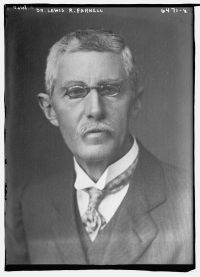
John Henry Freese

Biographical details

John Henry Freese 1911 Encyclopedia Britannica (1911)

Artemis is the goddess of chastity, an aspect of her character which gradually assumed more and more importance—the protectress of young men and maidens, who defies and contemns the power of Aphrodite. Her resemblance to her brother is shown in many ways. Like him, armed with bow and arrows, she deals death to mortals, sometimes gently and suddenly, especially to women, but also as a punishment for offences against herself or morality.
Source: Wikisource

John Henry Freese 1911 Encyclopedia Britannica (1911)

The younger generation, in view of the requirements and criticism of a reading public, cultivated the art of composition and rhetorical embellishment. As a general rule the annalists wrote in a spirit of uncritical patriotism, which led them to minimize or gloss over such disasters as the conquest of Rome by Porsena and the compulsory payment of ransom to the Gauls, and to flatter the people by exaggerated accounts of Roman prowess, dressed up in fanciful language.
Source: Wikisource

John Henry Freese 1911 Encyclopædia Britannica, Volume 2… (1911)

The most usual attributes of Apollo were the lyre and the bow; the tripod especially was dedicated to him as the god of prophecy. Among plants, the bay, used in expiatory sacrifices and also for making the crown of victory at the Pythian games, and the palm-tree, under which he was born in Delos, were sacred to him; among animals and birds, the wolf, the roe, the swan, the hawk, the raven, the crow, the snake, the mouse, the grasshopper and the griffin, a mixture of the eagle and the lion evidently of Eastern origin.
Source: Wikisource

Get perspective with Kwize: daily news enlightened by great literature