Fascia

Definition and stakes

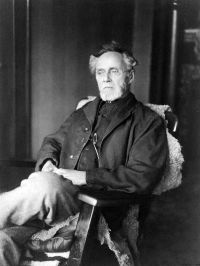
Portrait of A. T. Still A. T. Still,  Philosophy of Osteopathy

“ This life is surely too short to solve the uses of the fascia in animal forms. It penetrates even its own finest fibers to supply and assist its gliding elasticity. Just a thought of the completeness and universality in all parts, even though you turn the visions of your mind to follow the infinitely fine nerves. There you see the fascia, and in your wonder and surprise, you exclaim, "Omnipresent in man and all other living beings of the land and sea." ”
Source: Gutenberg

Portrait of A. T. Still A. T. Still,  Philosophy of Osteopathy

“ But the fascia is the ground in which all causes of death do the destruction of life. Every view we take, a wonder appears. Here we find a place for the white corpuscles building anew and giving strength to throw impurities from the body by tubes that run from the skin to tanks of useful fluids, that would heap up and are no longer of use in the body. No doubt nerves exist in the fascia, that change the fluid to gas, and force it through the spongy and porous system as a delivery by the vital chain of wonders, that go on all the time to keep nerves wholly pure. ”
Source: Gutenberg

Portrait of A. T. Still A. T. Still,  Philosophy of Osteopathy

“ We write much of the universality of the fascia to impress the reader with the idea that this connecting substance must be free at all parts to receive and discharge all fluids, if healthy to appro [Pg 167] priate and use in sustaining animal life, and eject all impurities that health may not be impaired by the dead and poisoning fluids. Thus a knowledge of the universal extent of the fascia is almost imperative, and is one of the greatest aids to the person who seeks cause of disease. He of all men should know more of the fascia, and when disease is local or general. ”
Source: Gutenberg

Get perspective with Kwize: daily news enlightened by great literature