Connective tissue

Definition and stakes

Francis M. Balfour,  The Works of Francis Maitland Balfour…

“ The connective-tissue cells which have grown out from the muscle-plates form a continuous arch over the dorsal surface of the neural tube (vide Pl. 22, fig. F) : and in some specimens it is difficult to see whether the arch is formed by the rudiment of the posterior root or by connective-tissue. It is, however, quite easy with the best specimens to satisfy one's self that it is from the connective-tissue, and not the nerve-rudiment, that the dorsal investment of the neural canal is derived. ”
Source: Gutenberg

Herbert George Flaxman Spurrell,  The commonwealth of cells

“ Diagram 20.—A Connective-tissue Cell giving rise to Long Collagenous Fibres.
Bone is formed very much as if Nature were rectifying a mistake. When a rod of cartilage is unequal to its work it is eaten hollow, and fresh connective-tissue cells immigrate and fill up the cavity, eventually laying down a fine network of cells in its place, the meshes of which are filled with inorganic calcium salts, chiefly phosphate of lime. Nature then benefits by experience, and the last bones to be formed are not preceded by any makeshift cartilage, but built up straight away in ordinary connective tissue.
”
Source: Gutenberg

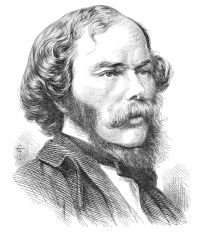
Portrait of George Henry Lewes George Henry Lewes,  The Physical Basis of Mind

“ A mere glance at nervous tissue in any part will show that cells are far from forming the principal constituents. In the epidermis or a gland the cell is obviously the chief element, forming the bulk of the tissue, and being the characteristic agent. In nerve-tissue, as in connective tissue, the reverse is the case. We must therefore cease to regard the cell as having the importance now attached to it, and must rather throw the emphasis on the fibres and neuroglia. ”
Source: Gutenberg

Get perspective with Kwize: daily news enlightened by great literature