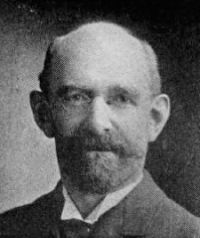
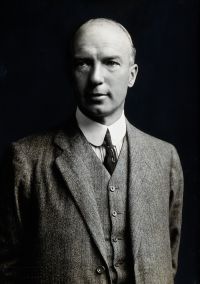
Thomas Gregor Brodie

Biographical details

Thomas Gregor Brodie,  1911 Encyclopædia Britannica, Volume 6… (1911)

“ Muscle.—Muscle is the contractile tissue of the body, that tissue by which the various parts of the body are moved. Thus it forms the main bulk of the limbs, back, neck and body wall. Most of the viscera too possess well-developed muscular coats. When separated into its constituent parts it is seen that muscle in all instances is built up of a number of long fibres. These are of three well-defined types. Those forming the skeletal muscles are of large size, even in some instances up to 12 cms. ”
Source: Wikisource

Thomas Gregor Brodie,  1911 Encyclopædia Britannica, Volume 17… (1911)

“ The tissue contains in itself a store of food amply sufficient to enable it to continue working for a long time after its blood-supply has been stopped, and everything indicates that the supply of chemical energy to the tissue may be slow or even withheld for a considerable time. Hence we are led to conclude that the increased flow of blood sent to a tissue when it is thrown into activity is first and foremost to give that tissue an increased oxygen supply ”
Source: Wikisource

Thomas Gregor Brodie,  1911 Encyclopædia Britannica (1911)

“ The mechanism of destruction of a bacterium once it has been taken up by a phagocyte is probably, just as in the instance of dead cellular material, one of intracellular digestion. The bacterium before being engulfed is probably inert in most instances, though it may yet prove too strong for the phagocyte. The next stage we can trace is the formation of a vacuole around the organism, or, if the latter be large, around a part of the organism, and the part thus surrounded quickly shows signs of destruction. ”
Source: Wikisource

Get perspective with Kwize: daily news enlightened by great literature