Corpuscle

Definition and stakes

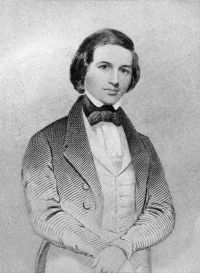
Portrait of Thomas Henry Huxley Thomas Henry Huxley,  Autobiography and Selected Essays

“ The substance which is thus active is a mass of protoplasm, and its activity differs in detail, rather than in principle, from that of the protoplasm of the nettle. Under sundry circumstances the corpuscle dies and becomes distended into a round mass, in the midst of which is seen a smaller spherical body, which existed, but was more or less hidden, in the living corpuscle, and is called its nucleus. Corpuscles of essentially similar structure are to be found in the skin, in the lining of the mouth, and scattered through the whole framework of the body. ”
Source: Gutenberg

Ray Vaughn Pierce,  The People's Common Sense Medical Adviser in Plain English

“ It is generally believed that the red corpuscles are derived in some way from the colorless. It is supposed that the red corpuscle is merely the nucleus of a colorless corpuscle enlarged, flattened, colored and liberated by the bursting of the wall of its cell. When blood is taken from an artery and allowed to remain at rest, it separates into two parts: a solid mass, called the clot, largely composed of fibrin; and a fluid known as the serum, in which [pg 55] the clot is suspended. ”
Source: Gutenberg

W. G. Aitchison Robertson,  Aids to Forensic Medicine and Toxicology

“ The human blood-corpuscle is a non-nucleated, biconcave disc, having a diameter of about 1/3500 of an inch. All mammalian red corpuscles have the same shape, except those of the camel, which are oval. The corpuscles of birds, fishes, reptiles, and amphibians, are oval and nucleated. The corpuscles of most mammals are smaller than those of man, but the size of a corpuscle is affected by various circumstances, such as drying or moisture, so that the medical witness is rarely justified in going farther than stating whether the stain is that of the blood of a mammal or not. ”
Source: Gutenberg

Get perspective with Kwize: daily news enlightened by great literature