Thoracic duct

Definition and stakes

Jean Macé,  The History of a Mouthful of Bread

“ You know that all our scavengers uniting together deposit their sweepings in one large canal, which is called the thoracic duct. The chyle scavengers arrive there just like the rest, and there our poor friend finds himself confounded for a moment with all the dross of the body, as sometimes happens to men who devote themselves to the public good. But the crisis passes in an instant. A little further off, the thoracic duct pours its whole contents together into a large vein situated close to the heart, and the blood has no difficulty in recognising and appropriating what belongs to him. ”
Source: Gutenberg

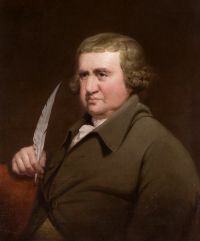
Portrait of Erasmus Darwin Erasmus Darwin,  Zoonomia, or, the Laws of Organic Life… (1796)

“ The valves of the thoracic duct are few, some assert they are not more than twelve, and that they do not very accurately perform their office, as they do not close the whole area of the duct, and thence may permit chyle to repass them downwards. In living animals, however, though not always, yet more frequently than in the dead, they prevent the chyle from returning. The principal of these valves is that, which presides over the insertion of the thoracic duct, into the subclavian vein ”
Source: Wikisource

Francis M. Walters,  Physiology and Hygiene for Secondary Schools

“ The thoracic duct has a length of from sixteen to eighteen inches, and is about as large around as a goose quill. The lower end terminates in an enlargement in the abdominal cavity, called the receptacle of the chyle. It is provided with valves throughout its course, in addition to one of considerable size which guards the opening into the blood vessel. ”
Source: Gutenberg

Get perspective with Kwize: daily news enlightened by great literature