Aorta

Definition and stakes

William Harvey,  The Works of William Harvey M.D

“ For if the aorta be tied near the left ventricle of the heart in a living animal, and all the blood removed from the arteries, the veins are still seen full of blood; so that it neither moves back spontaneously into the arteries, nor can it be repelled into these by any force, whilst even in a dead animal it nevertheless falls of its own accord through the finest pores of the flesh and skin from superior into inferior parts. ”

Source: Gutenberg

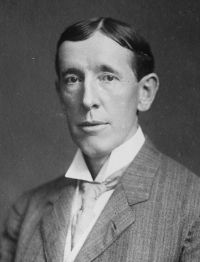
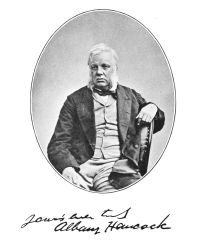
Portrait of H. G. Wells H. G. Wells,  Text Book of Biology, Part 1: Vertebrata

“ The cardiac aorta (c.ao.) lies along the ventral side of the pharynx, and sends branches up along the complete bars between the gill slits. There is no -distinct- heart, but the whole of the cardiac aorta is contractile, and at the bases of the aortic arches that run up the bars there are contractile dilatations that assist in the propulsion of the blood. Dorsal to the pharynx, as in fishes, there is a pair of dorsal aorta (d.ao.) that unite above the liver (compare the frog, for instance) , and thence run backward as a median dorsal aorta (d.ao.') . A portal vein (p.v.) ”
Source: Gutenberg

William Harvey,  An Anatomical Disquisition on the Motion of the Heart & Blood in Animals (1906)

“ But the arteries receive blood from the veins in no other way than by transmission through the heart, as we have already seen; so that if the aorta be tied at the base of the heart, and the carotid or any other artery be opened, no one will now be surprised to find it empty, and the veins only replete with blood. ”
Source: Gutenberg

Get perspective with Kwize: daily news enlightened by great literature