Biological organization

Definition and stakes

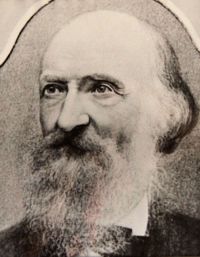
Portrait of Lester Frank Ward Lester Frank Ward,  The American Journal of Sociology (1896)

“ Biotic organization proper consists of some kind of combination of the biological units or cells into tissues and organs, thus forming a compound or complex body called an organism. Such combinations are formed in a great variety of ways and the primary units are integrated in all degrees. In the highest organisms there is complete integration and interdependence of parts. ”
Source: Wikisource

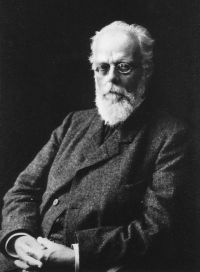
Michael F. Guyer,  Being Well-Born: An Introduction to Eugenics

“ It has the necessary parts, the cell body and the nucleus. Moreover it exhibits all of the fundamental activities of life, though in a simplified form, that a complex higher organism does.
Importance of Cell-Theory.—This discovery that every living thing is a single cell or an aggregation of cooperating cells and cell-products is one of our most important biological generalizations because it has brought such a wide range of phenomena under a common point of view. In the first place, the structure of both plants and animals is reducible to a common fundamental unit of organization.
”
Source: Gutenberg

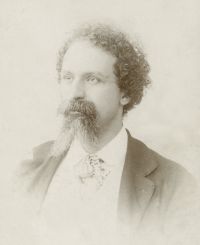
Portrait of Herbert Spencer Herbert Spencer,  The Principles of Biology — Appendix B(II) (1898)

“ Here, then, we have the great principle of the division of labour, which is the principle of all organization, taken as primarily illustrated in the division between the reproductive cells and the non-reproductive or somatic cells—the cells devoted to the continuance of the species, and the cells which subserve the life of the individual. ”
Source: Wikisource

Get perspective with Kwize: daily news enlightened by great literature