Summary

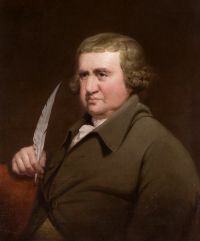
Portrait of Erasmus Darwin Erasmus Darwin Zoonomia, or, the Laws of Organic Life… (1796)

And yet the changes which many of them undergo in their early state to that of their maturity, are as different, as one animal can be from another. As those of the gnat, which passes his early state in water, and then stretching out his new wings, and expanding his new lungs, rises in the air; as of the caterpillar, and bee-nymph, which feed on vegetable leaves or farina, and at length bursting from their self-formed graves, become beautiful winged inhabitants of the skies, journeying from flower to flower, and nourished by the ambrosial food of honey.
Source: Wikisource

Portrait of Erasmus Darwin Erasmus Darwin Zoonomia, or, the Laws of Organic Life… (1796)

The formation of the organs of sexual generation, in contradistinction to that by lateral buds, in vegetables, and in some animals, as the polypus, the tænia, and the volvox, seems the chef d'œuvre, the master-piece of nature; as appears from many flying insects, as in moths and butterflies, who seem to undergo a general change of their forms solely for the purpose of sexual reproduction, and in all other animals this organ is not complete till the maturity of the creature.
Source: Wikisource

Portrait of Erasmus Darwin Erasmus Darwin Zoonomia, or, the Laws of Organic Life… (1796)

Hartley in his work on man, and some other philosophers, have been of opinion, that our immortal part acquires during this life certain habits of action or of sentiment, which become for ever indissoluble, continuing after death in a future state of existence; and add, that if these habits are of the malevolent kind, they must render the possessor miserable even in heaven. I would apply this ingenious idea to the generation or production of the embryon, or new animal, which partakes so much of the form and propensities of the parent.
Source: Wikisource

Get perspective with Kwize: daily news enlightened by great literature