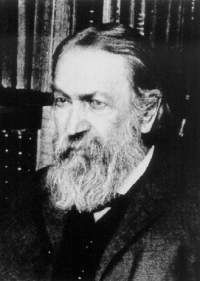
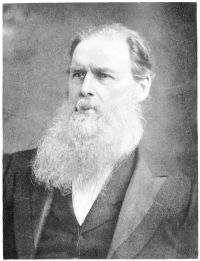
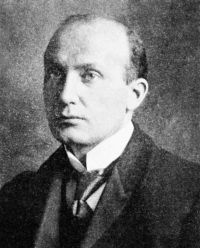
Similarity, in geometry, refers to the relationship between objects that share the same shape, achieved through scaling, rotation, or reflection, ensuring proportional alignment of sides and equal angles. This concept forms the basis for classifying figures such as circles or squares as universally similar, whereas others, like rectangles, require particular proportional conditions. Philosophically, authors like Nora Archibald Smith highlighted similarity's role in connecting individual perceptions to general principles, while Herbert Spencer linked it to reasoning through relational recognition.
George Stuart Fullerton examined its psychological aspects, questioning how sameness connects distinct entities. These viewpoints illustrate similarity as both a mathematical structure and a cognitive instrument, bridging exactness and abstraction. The theme thus intertwines geometric precision with philosophical exploration, emphasizing its dual function in organizing knowledge and enhancing human understanding.