Parasitism

Definition and stakes

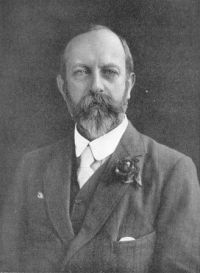
Portrait of Peter Chalmers Mitchell Peter Chalmers Mitchell,  1911 Encyclopædia Britannica (1911)

“ Origin of Parasitism.—Now that the theory of spontaneous generation has been disproved, the problem of parasitism is no more than detection of the various causes which may have led organisms to change their environment. Every kind of parasite has relations more or less closely akin which have not acquired the parasitic habit, and every gradation exists between temporary and permanent parasites, between creatures that have been only slightly modified and those that have been profoundly modified in relation to this habit. ”

Source: Wikisource

Frank E. Beddard,  The Cambridge natural history, Vol… (1901)

“ Effect of Parasitism on the Parasite.—The usual effect of parasitism on the parasitic organism is that the various organs necessary for a free life tend to degenerate, whilst there is a multiplication and development of organs of adhesion, by means of which the parasite maintains its hold on its host. There is further an immense increase in the powers of reproduction, which may take the form of an increase in the number of fertilised eggs produced, or the parasite may at some time of its life reproduce asexually, by budding, or fission, or parthenogetically. ”
Source: Gutenberg

O. A. Johannsen,  Handbook of Medical Entomology

“ Parasitism is an adaptation which has originated very often among living organisms and in widely separated groups. It would seem simple to define what is meant by a "parasite" but, in reality, the term is not easily limited. It is often stated that a parasite is "An organism which lives at the expense of another," but this definition is applicable to a predatory species or, in its broadest sense, to all organisms. ”
Source: Gutenberg

Get perspective with Kwize: daily news enlightened by great literature