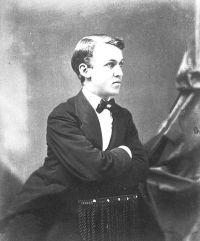
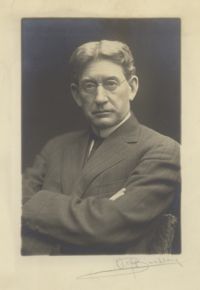
Walter Kidd, Initiative in Evolution
“ It is not too much to say that he who studies history, national, political, constitutional, ecclesiastical, military or economic is as much a biologist in the widest sense as the botanist and zoologist. ”
A biologist is a scientist devoted to the study of living organisms, ranging from cellular processes to ecological systems, often focusing on areas such as genetics, evolution, or ecology. Authors like Walter Kidd stressed the wide-ranging nature of biology, drawing parallels between historical study and biological investigation, while H. Newell Martin emphasized the field's potential to transform how critical scientific questions are addressed.
Julian Huxley likened modern biology to 19th-century physics and chemistry, highlighting its transition from mere observation to experimental analysis. These viewpoints illustrate a discipline that is both fundamental and ever-evolving, connecting natural phenomena with practical applications in society. The integration of these perspectives highlights biology’s role as a unifying science, deepening our understanding of life’s intricacies while driving progress in medicine, agriculture, and environmental care.
Walter Kidd, Initiative in Evolution
“ It is not too much to say that he who studies history, national, political, constitutional, ecclesiastical, military or economic is as much a biologist in the widest sense as the botanist and zoologist. ”
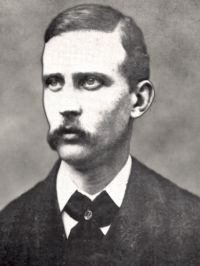 H. Newell Martin,
Popular Science Monthly
(1877)
H. Newell Martin,
Popular Science Monthly
(1877)
“ I can imagine no time for the biologist to live in which would be more interesting than the coming half-century, or none in which he will have a greater incentive to study; he seems to have almost within his grasp the solution of problems of the widest significance. ”
Various, Popular Science Monthly (1911)
“ Biology uses experiment and hence begins with germ cells: social science is based on observation and hence its data are the visible differences which the study of men affords. Both call their data characters, but as a loose terminology creates confusion, I shall call the germinal variations the biologist finds through experiment characters, while the visible differences in men open to observation I shall call traits. The problem then is what is the relation of biologic characters to visible traits? Is there a character for each trait, or do independent laws govern traits? ”