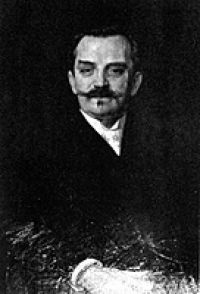
Edmond Perrier

Biographical details

Portrait of Edmond Perrier Edmond Perrier,  Popular Science Monthly (1880)

“ Here we are in the presence of unity; there is no longer any question of association. Most living cells are composed of four parts—a membranous envelope, a contained fluid in which is a special globule, and the nucleus, containing the nucleolus. Of these four parts only one, the contained semi-fluid, perfectly limpid or finely granular, the protoplasm, is indispensable. It is in this strange substance that life, which needs no other apparatus to manifest itself, resides. Those remarkable beings, the Monera, are formed of it alone. ”
Source: Wikisource

Portrait of Edmond Perrier Edmond Perrier,  Popular Science Monthly (1880)

“ What, then, can be the nature of protoplasm? Struck by its homogeneity, the identity of the elements that compose it with those that form albuminoid substances, it has been taken for a mere chemical compound, and it has been boldly asked if it is not possible to produce it artificially; if man has not power to relight the torch of Prometheus and create life at will. ”
Source: Wikisource

Portrait of Edmond Perrier Edmond Perrier,  Popular Science Monthly (1880)

“ The social manners of dogs, antelopes, beavers, and many birds are well known, while the complex and perfectly coördinated operations of societies of bees, ants, termites, are the admiration of the world. Do such societies ever become individuals? Certainly not. But there exist other animal societies in which the relations are closer—where the individuals are not only in immediate contact but in continuity of tissue with their neighbors. These societies are called colonies, but the individuals that compose them are not always indissolubly united together. ”
Source: Wikisource

Get perspective with Kwize: daily news enlightened by great literature