Toxodon

Definition and stakes

Frank E. Beddard,  Cambridge Natural History Mammalia (1902)

“ There is still the slight projection upon the premaxillary bones, but the nostril is directed more forwards than in Toxodon. The zygoma, too, is massive. The second pair of incisors in the upper jaw and the outer (third) pair in the lower jaw form biggish tusks in the adult. These and the molar teeth are, however, finally rooted, and do not grow, as in Toxodon, from persistent pulps. The genus is from the older Tertiary of Patagonia. Five or six species have been described. Some are as large as a Rhinoceros, others as small as a Sheep. ”
Source: Wikisource

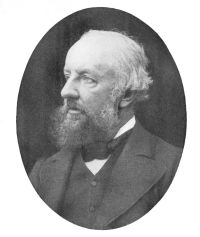
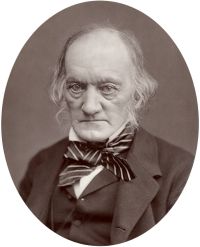
Portrait of Richard Owen Richard Owen,  The zoology of the voyage of H.M.S. Beagle… (1839)

“ In order to economise space, and to increase the power of resistance in the tooth, and perhaps, also, to diminish the effects of direct pressure on the highly vascular and sensible matrix, we find the molars and their sockets are curved, but in a less degree than those of the upper jaw of the Toxodon. They correspond, however, with the superior molars of the Toxodon in the antero-posterior diameter, in being small and simple at the anterior part of the jaw, and by increasing in magnitude and complexity as they are situated more posteriorly. ”
Source: Gutenberg

Portrait of Charles Darwin Charles Darwin,  Coral Reefs; Volcanic Islands; South American Geology…

“ North of the Bajada, M. d’Orbigny found, in beds which he considers as lying beneath the strata here described, remains of a Toxodon, which he has named as a distinct species from the T. Platensis of the Pampean formation. Much silicified wood is found on the banks of the Parana (and likewise on the Uruguay) , and I was informed that they come out of these lower beds; four specimens collected by myself are dicotyledonous. ”
Source: Gutenberg

Get perspective with Kwize: daily news enlightened by great literature