Summary

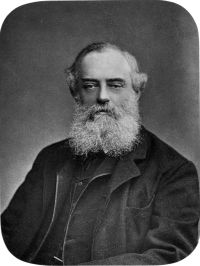
Portrait of William Thomas Blanford William Thomas Blanford The Fauna of British India, including Ceylon and Burma… (1888)

There is no particular season for breeding. The young clings tenaciously to the mother for the first month, after which it ventures out little by little, and, to quote Tickell, "it is exceedingly amusing to watch the rough tenderness with which the latter [the mother] checks at first the over-venturesome sallies of the little animal, which is often pulled back by the tail, chastised with a cuff on the head, and then gravely huddled up to the breast, where the shrieks and chattering of the delinquent, which is just as fractious as a child under such circumstances, are soon appeased."
Source: Wikisource

Portrait of William Thomas Blanford William Thomas Blanford The Fauna of British India, including Ceylon and Burma… (1888)

Although this monkey is not regarded as sacred by Hindus, it is never molested by them, and in many parts of the country it is as impudent as the Hanumán and even more mis-chievous. Very intelligent, and, when young, fairly docile, it is one of the commonest animals kept tame, and throughout Northern India it is the monkey carried about by itinerant showmen, and taught to perform tricks of various kinds. It is a most amusing creature, the incarnation of mischief and curiosity, but frequently rather ill-tempered. Older individuals are usually savage.
Source: Wikisource

Portrait of William Thomas Blanford William Thomas Blanford The Fauna of British India, including Ceylon and Burma… (1888)

A few States, such as Nepal and Bhutan, at present not accessible to Europeans, are comprised, because it would be difficult to leave them out; scarcely an animal occurs in either not found also in British territories or in protected States, such as Sikhim.
The whole of India and its dependencies, with the exception of the higher Himalayas and Trans-Himalayan tracts, is included in the Oriental Region, one of the six great zoological regions [1] into which the terrestrial surface of the globe was divided by Sclater, whose views have been adopted by Wallace and others.
Source: Wikisource

Get perspective with Kwize: daily news enlightened by great literature