Summary

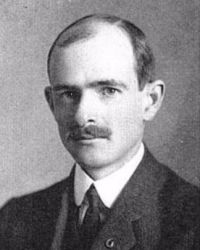
Portrait of Joseph Grinnell Joseph Grinnell Natural History of the Ground Squirrels of California (1918)

Sometimes the animal rises still higher, supporting its whole body on its hind feet and using its stubby tail as a prop (C. L. Camp, MS) . The fact that the nose is continually twitched up and down, as if the animal were drawing in air, suggests that the sense of smell may be keen and that it may be used to determine the nature of a supposed enemy. If the observer continues his approach the squirrel suddenly deserts its "picket-pin" pose and dashes for its burrow, where it may hesitate a moment on all fours for one final look before diving out of sight.
Source: Wikisource

Portrait of Joseph Grinnell Joseph Grinnell Natural History of the Ground Squirrels of California (1918)

Unfortunately, we have never availed ourselves of an opportunity to dig out the burrow system of a Golden-mantled Ground Squirrel. We infer it to be simple and relatively short, for two reasons: the mounds at the mouths of the burrows are usually small in quantity of earth composing them; and the big roots, logs or rocks beneath which the burrows in practically all cases lead, would seem to do away with the need of an extensive and deeply penetrating system so as to secure safety from enemies which pursue their prey by digging.
Source: Wikisource

Portrait of Joseph Grinnell Joseph Grinnell Natural History of the Ground Squirrels of California (1918)

One individual was surprised eight feet above the ground in a tree yucca, where he had doubtless been prospecting among the ripe pods for the seeds. He ran down the yucca trunk head foremost, with clearly audible noise of claws on rough bark. Even in this position the tail was kept appressed to the rump and was flicked in fore-and-aft direction. This ability to climb is not exceptional among individuals of this species, and is quite consistent with the general agility of the animal.
Source: Wikisource

Get perspective with Kwize: daily news enlightened by great literature