Sikkim

Definition and stakes

R. G. Latham,  The Ethnology of the British Colonies and Dependencies

“ The Dhimal bring us to Sikkim. The dominant nation of Sikkim are—
The Lepchas.—Their language also is monosyllabic; but it is Tibetan rather than Burmese. They are a Sikkim rather than a British Indian population. [130]
When we have passed the rajahship of Sikkim, we reach that of Nepâl. This, again, is independent. Such being the case, the line of frontier between the Hindú populations and the populations of the Bodo and Garo character lies beyond the pale of the British dependencies.
”
Source: Gutenberg

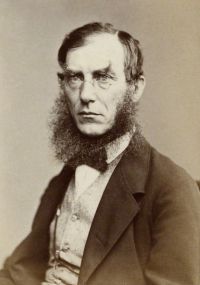
Portrait of Joseph Dalton Hooker Joseph Dalton Hooker,  Himalayan Journals — Complete

“ Mon Lepcha commands a most extensive view of Sikkim, southward to Dorjiling. At my feet lay the great and profound valley of the Ratong, a dark gulf of vegetation. Looking northward, the eye followed that river to the summit of Kinchinjunga (distant eighteen miles) , which fronts the beholder as Mont Blanc does when seen from the mountains on the opposite side of the valley of Chamouni. To the east are the immense precipices and glaciers of Pundim, and on the west those of Kubra, forming great supporters to the stupendous mountain between them. ”
Source: Gutenberg

Portrait of Joseph Dalton Hooker Joseph Dalton Hooker,  Himalayan Journals — Volume 2

“ The northern and north-eastern frontier of Sikkim is beyond the region of much rain, and is not a natural, but a political line, drawn between that country and Tibet. Sikkim lies nearly due north of Calcutta, and only four hundred miles from the Bay of Bengal; its latitude being 26 degrees 40 minutes to 28 degrees N., and longitude 88 degrees to 89 degrees E.
The main features of Sikkim are Kinchinjunga, the loftiest hitherto measured mountain, which lies to its north-west, and rises 28,178 feet above the level of the sea
”
Source: Gutenberg

Get perspective with Kwize: daily news enlightened by great literature