“ The Mahratta sepoy is certainly no swashbuckler. To look at him, with his dark skin and irregular features, you would not take him for a member of a military caste. No one cares less for appearance; and his native dress--the big, flat pagri, dhoti, and large loose shoes of the Dekkan and Konkan--do not lend themselves to smartness. Nor does the King's uniform bring with it an immediate transformation. The unaccustomed military turban, which the Sikh or Pathan ties deftly as if with one fold, falls about the head and down the neck of the Mahratta in the most capricious convolutions. ”
Edmund Candler
Biographical details
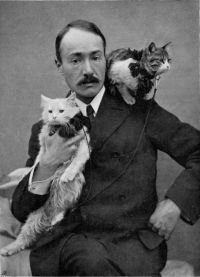
Edmund Candler (1874–1926) was a British journalist, novelist, and educator whose literary works shed light on the complexities of colonial India, frequently drawing comparisons to Rudyard Kipling’s portrayals while maintaining his own unique perspective.
Educated at Cambridge and deeply involved in India’s socio-political environment as a teacher and correspondent, Candler’s writings—such as The Unveiling of Lhasa and The Sepoy—examine themes of cultural conflict, imperial disenchantment, and the clash between British rule and Indian nationalism. His novels, particularly Siri Ram: Revolutionist, reflect a shift from idealized imperial stories to a critical examination of the paradoxes of colonial governance, capturing the decline of British influence in South Asia.
Quotes by Edmund Candler
Edmund Candler, The Unveiling of Lhasa
“ It is difficult to imagine life anywhere else. One feels as if one could never again be cold or dirty, or miserably uncomfortable, without thinking of that gray fortress with its strange unknown history, standing alone in the desolate plain. For my own part, speaking figuratively—and unfigurative language is impotent on an occasion like this—the place will leave an indelible black streak—very black indeed—on a kaleidoscopic past. There can be no faint impressions in one's memories of Phari Jong. The dirt and smoke and dust are elemental, and the cold is the cold of the Lamas' frigid hell. ”
Edmund Candler, The Unveiling of Lhasa
“ Just before dusk there was generally a storm in the valley, which only occasionally reached the city; but the breeze stirred the poplars, and the silver under the leaves glistened brightly against the background of clouds. Often a rainbow hung over the Potala like a nimbus.On the Lingkhor, or circular road, which winds round Lhasa, we saw pilgrims and devotees moving slowly along in prayer, always keeping the Potala on their right hand. The road is only used for devotion. One meets decrepit old women and men, halting and limping and slowly revolving their prayer-wheels and mumbling charms. ”