“ Think, Sahib, of where I should have been if my lamp had gone out. I thought of that myself. "Billy," I said, "you are a fool. You are running into danger like an ass that has no wit to keep out of it. Go back! Tell them at the camp what you have found, and bring the rajah and his men with you to search this place in the daylight." That would have been the wisest plan, Sahib. Why did I not take it? As I live I cannot tell you. Sometimes,' his voice dropped mysteriously, 'I have thought that it was not of my own will I went forward. The Sahib, being a wise man, will understand. ”
Sahib
Definition and stakes
The term Sahib, originating from the Arabic sahib (companion), serves as an honorific title or respectful form of address, historically used throughout South and Central Asia. It signified social standing, frequently applied to Europeans in colonial settings or to nobles in princely states, as depicted in Rudyard Kipling’s Kim, where it emphasizes cultural and racial hierarchies. Writers such as C.
Despard and Percival Wren utilized it to illustrate exchanges between colonizers and the colonized, underscoring its function as both a sign of respect and an emblem of power disparities. In literary works, Sahib frequently embodies the intricacies of identity, authority, and intercultural relations, demonstrating its transformation from an honorific to a colonial construct. Its application, as recorded in texts from the 19th century, shows how language shapes social stratification and historical memory.
Quotes about “Sahib”
 Rudyard Kipling,
Traffics and Discoveries
Rudyard Kipling,
Traffics and Discoveries
“ Is there any Sahib on the train who will interpret for a trooper of the Gurgaon Rissala going about his business in this devil’s devising of a country, where there is no flour, no oil, no spice, no red pepper, and no respect paid to a Sikh? Is there no help?... God be thanked, here is such a Sahib! Protector of the Poor! Heaven-born! Tell the young Lieutenant-Sahib that my name is Umr Singh; I am—I was servant to Kurban Sahib, now dead; and I have a pass to go to Eshtellenbosch, where the horses are. Do not let him herd me with these black Kaffirs!... ”
The Hermit Doctor of Gaya: A Love Story of Modern India
“ Go on.""Yes, Sahib." The young man pushed back the short black curls from his neck and resumed his old attitude of watchfulness on the flames. But his voice sounded louder, clearer:"Thereafter, Sahib, the need of Chitore grew desperate. In vain, the bravest of her nobles sallied forth—the armies of Bahadur Shah swept over them as the tempest sweeps over the ripe corn, and hour by hour the ring about the city tightened till the very gates shivered beneath the enemy's blows. It was then the Rani bethought her of a custom of her people. ”

Related terms
Authors who wrote about “Sahib”
Rudyard Kipling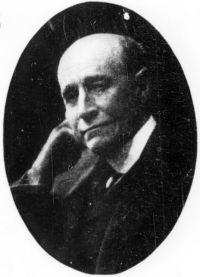 William Alexander Fraser
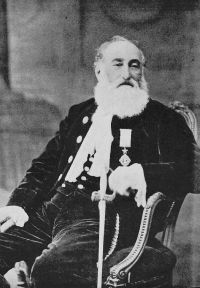 Philip Meadows TaylorEdmund Candler
 Maud Diver| section_authorVarious
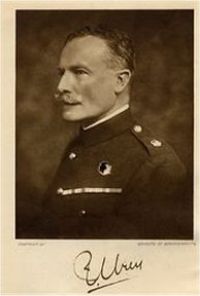 Percival Christopher Wren
 A. VadiveluA. L. O. E.
 Will Levington ComfortSydney C. Grier
 Emily Eden
 Meadows Taylor
 George Manville FennHerbert Strang
 C. DespardVictoria Cross
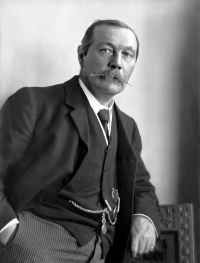 Arthur Conan Doyle
 A. E. W. Mason