“ As for the rajah, his heart gives a great bound. Even he, who knows her so well, has never seen her look so lovely. But what is the meaning of that strangeness in her face; the fixed gaze; the aloofness? To him she is like one who is moving in two worlds, whose body is present, and whose spirit is far away.The palki stops. It is uplifted still on the shoulders of the bearers, so that all who are within the radius of the torchlight can see it plainly. Tom had meant himself to step forward and bid her welcome, but he cannot speak for the rush of tears that are blinding and choking him. ”
Rajah
Definition and stakes
The term "Rajah" refers to a ruler or chieftain, typically linked with Southeast Asian or Indian princely states, embodying authority, cultural fusion, and spiritual depth. Authors such as C. Despard, William Henry Giles Kingston, and H. G. Wells examined this theme from different perspectives: Despard’s The Rajah’s Heir portrays the rajah as a respected leader navigating colonial conflicts and personal struggles, while Kingston’s The Young Rajah emphasizes political maneuvering and the concealment of identity.
Wells, in 30 Strange Stories, illustrates the rajah’s downfall, merging physical deterioration with symbolic fragility. These stories together highlight the rajah as a complex figure—both an emblem of tradition and a medium for exploring power, ethics, and cultural convergence.
Quotes about “Rajah”
“ In a few moments Lucy, accompanied by her ayah, drove off, and Grace turned her pale face to Hoosanee. 'Go on,' she said. 'Your master has sent you. He is the Rajah of Gumilcund.''You are right, most noble lady. My master, the rajah, has sent me. He has only lately come to rule over us; but already he knows the hearts of his people. He loves the English, and he would, if he could, avert these troubles. But he knows it to be impossible. The storm has broken, and it will sweep over the land and devastate it, and none can stay its course. ”
“ CHAPTER XVIII HOOSANEE'S MISSIONSo ran the speech which the young rajah of Gumilcund addressed to his people on that memorable night. The effect was tremendous. As from one man the voices of the multitude rose in shouts of applause. 'It is the voice of the dead. Byrajee Pirtha Raj, our father, has come back to us from the grave. We will do his bidding.' So the tumultuous cries rang out.Presently a herald went down amongst them, and imposed silence. Their rajah was pleased with their warm reception of his address; but business and not acclamation was the purpose of their coming together. ”
Related terms
Authors who wrote about “Rajah”
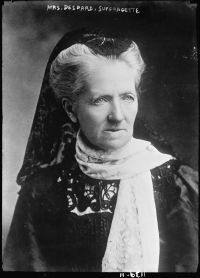 C. DespardC. A. BampfyldeAlice DracottMary FrereSir Spenser St. John
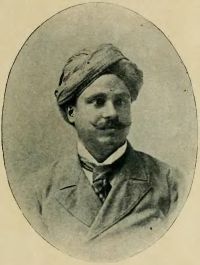 A. VadiveluAlladi Jagannatha Sastri
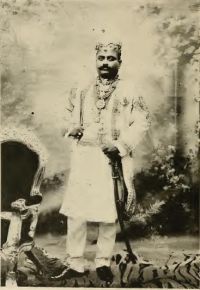 Venkata Ranga Rao
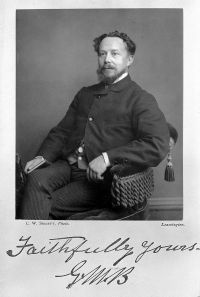 George Matthews BennettRajah of Sarawak James
 William Henry Giles Kingston
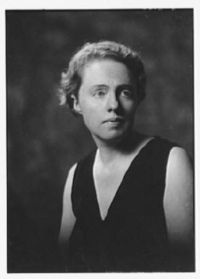 I. A. R. Wylie
 H. G. WellsHobart Caunter
 William Eleroy CurtisSivachandra VasuA. L. O. E.VariousSir James MarchantJ. W. Spalding