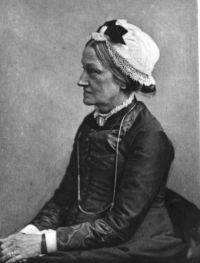
Sir Spenser St. John

Biographical details

Sir Spenser St. John Life in the forests of the Far East… (1862)

The Sarawak Malays and Dayaks, too late seeing their error in neglecting to fortify this also, rushed up the edge of the hill, and drove back the foremost Chinese; their danger was extreme; at that moment, as if by inspiration, all the young Chinese girls rushed to the front and encouraged the men to advance, which they again did, and cheered by the voices of these brave girls who followed them close, clapping their hands, and calling to them by name to fight bravely, they won the brow of the hill, and cleared the path of their less numerous foes.
Source: Gutenberg

Sir Spenser St. John Life in the forests of the Far East… (1862)

Peninjau, or the “look-out,” was the name of this spot, and it well deserved its name, as from a rock which terminated the level summit of a buttress can be seen a view unsurpassed in extent. I have spent many months at this cottage, and rarely an evening passed without my witnessing the sunset from this favourite rock.
The peak of Santubong is the centre of the picture, and the undulating ground between and the winding of the river may be seen clearly in all its varied detail. The calm sea—from this distance it seems always calm—bounds the horizon.
Source: Gutenberg

Sir Spenser St. John Hayti; or, The black republic (1884)

Though very unwilling to meet death on the field of battle when a loophole to escape is at hand, yet no one faces it more courageously than the Haytian, both black and coloured, when on the place of execution. He stands dauntless before the trembling soldiers, who, shutting their eyes or turning away their heads, fire at random, and who too often only wound, and have to charge and recharge their muskets before their prisoner dies.
Source: Gutenberg

Get perspective with Kwize: daily news enlightened by great literature