Corps

Definition and stakes

Various,  The Atlantic Monthly (1864)

“ I can speak only of the movements of corps, without dwelling upon those scenes which stir the blood and fire the soul,—the hardihood, the endurance, the cool, collected, reserved force, abiding the time, the calm facing of death, the swift advance, the rush, the plunge into the thickest of the fight, where hundreds of cannon, where fifty thousand muskets, fill the air with iron hail and leaden rain! ”
Source: Wikisource

Francis Duncan,  History of the Royal Regiment of Artillery…

“ At this time in the Regiment's history the feeling attained strength and certainty that to be a scientific corps was as high an aim as to win battles. Armed science was felt to be the aim of study. Something higher than mere gallantry, something more durable than brilliancy or dash, was felt to be necessary in officers of Artillery. Inventive genius was encouraged in the professional field; individual talent was coaxed and rewarded; and to the ordinary Regimental esprit, without which a military life would be a mere Valley of Dry Bones, was added scientific enthusiasm. ”
Source: Gutenberg

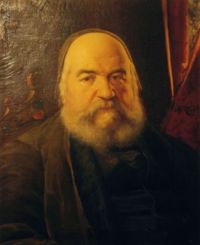
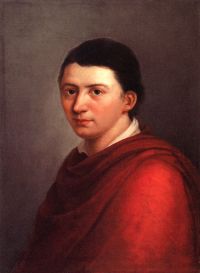
Portrait of Friedrich von Schlegel Friedrich von Schlegel,  The philosophy of life, and philosophy of language…

“ That most wonderful organization, the marvelous structure of bones and muscles, the outward organic frame, is, as it were, the body in a narrower sense, the pre-eminently material constituent of living bodies. The soul of man—here consequently the organic soul—is in the blood and in the five or six organs whose functions are first of all to elaborate the blood and afterward to provide for its circulation—or perhaps by maintaining a perpetual interchange of the breath and the external air, to keep the vital flame constantly burning on the hearth of life within. ”
Source: Gutenberg

Get perspective with Kwize: daily news enlightened by great literature