“ A cow these days is a different sort of a being, her coat like satin, and her udder generous, compared with the wild-eyed things with burrs in their tails, and their flanks crusted with filth, their udders the size of a kid glove, and yielding such a little dab of milk and for such a short period. ”
Cow
Definition and stakes
A cow is an adult female bovine, central to agriculture and culture, revered in Hinduism and essential to dairy, meat, and labor. Authors like MacGregor Jenkins celebrated their dignified grace, while Eugene Wood contrasted modern tamed cows with their wild ancestors.
Fanny Fern infused compassion, noting their unawareness of eventual fate, and John Burroughs admired their methodical path-making. These varied perspectives—from aesthetic appreciation to reflections on utility and consciousness—reveal the cow as both a symbol of rural life and a complex subject of human interaction, bridging practicality and poetic resonance.
Quotes about “cow”
MacGregor Jenkins, Bucolic Beatitudes (1925)
“ I had never had such a chance to observe a cow before and I made the most of it. I felt that I was seeing for the first time the noble dignity of her head, her broad fine brow, and above all the eyes, serene and beautiful. ”
Laura G. Case Collins, By-gone Tourist Days: Letters of Travel
“ And the cow is a beauty of the kind that makes one wish she could be driven home into his own pasture, to be “a possession forever.” She stands sleek and serene in her niche in the outer wall, and seems to follow you with a watchful gaze as you pluck buttercups and clover-blooms, lineal descendants, beyond a doubt, of those on which her prototype fed in the spacious close beneath her. ”
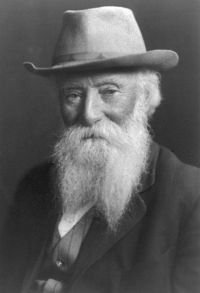 John Burroughs,
In the Catskills: Selections from the Writings of John Burroughs
John Burroughs,
In the Catskills: Selections from the Writings of John Burroughs
“ What a beautiful path the cows make through the snow to the stack or to the spring under the hill!—always more or less wayward, but broad and firm, and carved and indented by a multitude of rounded hoofs. In fact, the cow is the true pathfinder and path-maker. She has the leisurely, deliberate movement that insures an easy and a safe way. ”
Charles Bullard Fairbanks, My Unknown Chum: "Aguecheek"
“ What a charming sight is a cow—what a look of contentment she has—ambitious of nothing beyond the field of daily duty, and never looking happier than when she comes at night to yield a plenteousness of that fluid without which custards were an impossibility! ”
 Fanny Fern,
The Play-day Book: New Stories for Little Folks
(1857)
Fanny Fern,
The Play-day Book: New Stories for Little Folks
(1857)
“ I am no judge of cows, but I think that is a pretty cow. Any lady might be proud of her great, soft brown eyes. I am glad she does not know that one of these days, the butcher will thump her on the head and sell her for beef; I am glad she does not know that the pretty little calf, which frolics by her side, will be eaten for veal, next week. Munch away, old cow, and enjoy the fresh clover while you can; I don’t believe you have any idea what a pretty picture you and your baby calf make, as you stand with your hoofs in that brook and bend your heads to drink. ”
Various, St. Nicholas Magazine for Boys and Girls…
“ How should you like to see a cow with her ears—poor thing!—cut to the shape of a leaf with notched edges, and horns trained in some queer shape, twisted into curls, or divided into four, with two meeting overhead, and two turned down toward the ground? ”

“ Eight cows sauntered up interestedly and chewed their cuds at him in unison, standing contemplative, calculating, determined. It is a fact in natural history not widely enough recognised that the domestic cow is the most ferocious appearing of all known beasts—a thing to be proved by any who will survey one amid strange surroundings, with a mind cleanly disabused of preconceptions. ”
 Henry Rankin Poore,
Pictorial Composition and the Critical Judgment of Pictures
Henry Rankin Poore,
Pictorial Composition and the Critical Judgment of Pictures
“ The white cow focalizes the vision but the sky and the more graceful branches soon capture it. The cow in the right foreground is only valuable as an oppositional measure to the line of cows stretching across the picture which it helps to divert, otherwise she carries too much attraction to the side. ”
“ This particular cow of my neighbor’s that I hear lowing, is an entirely gentle creature ordinarily, but with a calf at her side she will pitch at any one who approaches her. And there is no other cow in the herd that mourns so long after her calf. The mother in her is stronger, more enduring, than in any of the other nineteen cows in the barn. My own cow hardly mourns at all when her calf is taken away. She might be an oak tree losing its acorns, or a crab losing her hatching eggs, so far as any show of love is concerned. ”
 Charles Dudley Warner,
My Summer in a Garden
Charles Dudley Warner,
My Summer in a Garden
“ The man and his cow have taught me a great lesson, which I shall recall when I keep a cow. I can recommend this cow, if anybody wants one, as a steady boarder, whose keeping will cost the owner little; but, if her milk is at all like her voice, those who drink it are on the straight road to lunacy. I think I have said that we have a game-preserve. We keep quails, or try to, in the thickly wooded, bushed, and brushed ravine. This bird is a great favorite with us, dead or alive, on account of its tasteful plumage, its tender flesh, its domestic virtues, and its pleasant piping. ”
Various, The Rural Magazine, and Literary Evening Fire-Side…
“ At the age of two months, the pigs had the sagacity to single out this cow from the rest, and when hungry would come round her, root at her legs, squeak, and exhibit the usual signs of their wants. The cow at length learned to lay down, and let them suck what they wanted. ”
Various, The Galaxy, January, 1877
“ A petted and well-fed cow has a benevolent and gracious look; an ill-used and poorly-fed one a pitiful and forlorn look. Some cows have a masculine or ox expression; others are extremely feminine. The latter are the ones for milk. Some cows will kick like a horse; some jump fences like deer. Every herd has its ringleader, its unruly spirit—one that plans all the mischief and leads the rest through the fences into the grain or into the orchard. ”
Various, Prairie Farmer, Vol. 56: No. 5…
“ The wandering cow feeds herself, in fact, from what might be the choicest product of her own milk, tramps the life out of much more, and tosses her head in disdain at much that if cut and properly fed in the stall, she would eat with a relish; so that it may be safely said that two, and some practical men say three, cows might be well-fed through soiling, on the same land that one is by the system of exclusive pasturing. ”
Various, Keeping one cow (1880)
“ We place as a frontispiece the portrait of a most famous and excellent cow—not so much for her beauty or on account of her breed, but as a model of a dairy cow, and one which may be carried in the mind when purchasing. ”
Various, The Century Illustrated Monthly Magazine…
“ II WHERE cattle and woodchuck thrive, there thrive I. The pastoral is in my veins. Clover and timothy, daisies and buttercups indirectly colored my youthful life; and if the dairy cow did not rock my cradle, her products sustained the hand that did rock it. Hence I love this land of wide, open, grassy fields, of smooth, broad-backed hills, and of long, sweeping mountain lines. The cow fits well into these scenes. ”
 Mrs. Loudon,
The Lady's Country Companion; Or…
Mrs. Loudon,
The Lady's Country Companion; Or…
“ To make you understand this fearful complaint, I must remind you that cows, in common with all ruminating animals, have four stomachs; and that, when a cow is turned into a field, she twists her tongue round mouthful after mouthful of the long grass, and after biting each off, conveys it without chewing to her first stomach or paunch, till this is about half full, when the animal seems stimulated by nature to seek rest and quiet, for she leaves off eating, and either stands perfectly still in some shady place, or lies down. ”
active 1823-1849 Mary Eaton, The Cook and Housekeeper's Complete and Universal Dictionary…
“ When a cow has been milked for several years, and begins to grow old, the most advantageous way is to make her dry. To effect this, bruise six ounces of white rosin, and dissolve it in a quart of water. The cow having been housed, should then be bled and milked; and after the mixture has been administered, she should be turned into good grass. She is no longer to be milked, but fattened on rich vegetables. Cows intended for breeding, should be carefully selected from those which give plenty of milk. ”
 Jean-Henri Fabre,
Our Humble Helpers: Familiar Talks on the Domestic Animals
(1918)
Jean-Henri Fabre,
Our Humble Helpers: Familiar Talks on the Domestic Animals
(1918)
“ The cow, if well fed, can furnish as much as twenty liters of milk a day. “The Breton breed stocks the five departments of ancient Brittany. It is characterized by smallness of body, readiness for work, and remarkable excellence of milk, which is rich in butter-fat. The cow’s coat is spotted with white and black in large splashes, and she has a black muzzle, slender horns, bright eyes, and determined gait. The ox, similarly spotted with black and white, has powerful and very pointed horns; but the peaceful beast never dreams of using its formidable weapons. ”
comte de Georges Louis Leclerc Buffon, Buffon's Natural History. Volume 05…
“ In those species of animals which man has formed into flocks, and whose multiplication is his principal object, the females are more useful than the males. The produce of the cow, is a benefit almost perpetually renewed; the flesh of the calf is healthy and delicate, the milk; is excellent food at least for children; butter relishes the greatest part of our victuals, and cheese is the common food of the country people. How many poor families are reduced to live entirely on their cow! ”
Willis P. Hazard, How to Select Cows
“ Then, we feel sure that a loose, open made cow, rather pointed, or sharp and well-defined, and the contrary of what we would look for in a flesh or beef producing animal; with a skin mellow and yellow, covered with soft, fine hair, and the nearer it comes to the quality and color of a first class Guernsey or Jersey cow, breeds which have for hundreds of years been bred for butter making, then we repeat we know she must be a good, rich milker and butter maker ”
 Robert Barnwell Roosevelt,
Five Acres Too Much
Robert Barnwell Roosevelt,
Five Acres Too Much
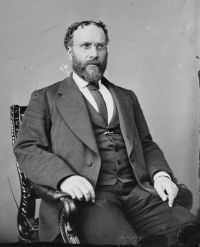
“ But cows do not balk, or run, or go lame, or need shoeing; and although they occasionally kick over the milk-pail, it is probably with good reason or with the best of intentions. They have nice long coats that keep them from catching cold in winter, and have an odd way of perspiring through their noses that is as curious as it is interesting. A cow is a model—without referring to this last peculiarity—for a wife; she is gentle, good, and beautiful, and never makes a fuss. The first point, therefore, was to buy a cow. ”
James Russel Roberts, Stock and stalks (1921)
“ The red farmer’s cow is often called the dual-purpose animal. She is about half way between the beef and the dairy. She protects herself well but not to the limit as does the Hereford. She produces milk well but not nearly so well as do the highly-bred and highly-developed strictly dairy types. Not one of these three types of cows will do to substitute for any other. Each has a place to fill and each is the best animal in her place. ”
T. D. Curtis, Hints on cheese-making, for the dairyman…
“ Cows must have plenty of clean, wholesome food and pure water, and must be every way made comfortable and contented, if the largest flow and best quality of milk is expected. The cow is sure to show, not only her own naturally good or bad qualities, but her keep and care, in the milk pail. ”
 A. Mary F. Robinson,
The fields of France
(1905)
A. Mary F. Robinson,
The fields of France
(1905)
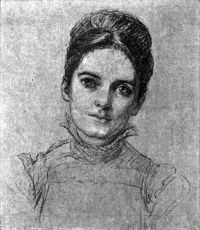
“ As each takes her stand, a cow-herd brings up to her a curly red calf. But the poor beastie has scarce pulled a throatful or so of its mother’s milk (its mother or its foster-mother, for at the buron each calf has a mother and a nurse) when a strong arm pulls it away and holds it tightly until the pail is full, when it may resume its supper, while the cow caresses it with a loving maternal tongue. All round the fold the beasts are being milked, the calves are bleating or sucking, the herdsmen are busy. ”
 Charles Louis Flint,
Milch Cows and Dairy Farming
Charles Louis Flint,
Milch Cows and Dairy Farming
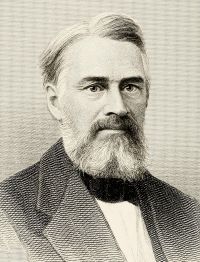
“ But in this scale the cow is so lightly esteemed for the dairy, that the udder, the size and shape of which is of the utmost consequence in determining the capacity of the milch cow, is set down as worth only one point, while, in the same scale, the horns and ears are valued at two points each, and the color of the nose, and the expression of the eye, are valued at four points each. ”
 John Stuart Mill,
Principles of Political Economy
(1871)
John Stuart Mill,
Principles of Political Economy
(1871)
“ "When the land is cultivated entirely by the spade, and no horses are kept, a cow is kept for every three acres of land, and entirely fed on artificial grasses and roots. ”
Robert Jennings, Cattle and Their Diseases
“ It is customary to give the cow, as soon as convenient after calving, some warm and stimulating drink—a little meal stirred into warm water, with a part of the first milk which comes from her, seasoned with a little salt. ”
 Robert Louis Stevenson,
A Child's Garden of Verses
Robert Louis Stevenson,
A Child's Garden of Verses
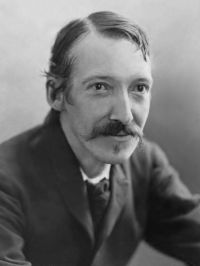
“ The friendly cow all red and white, I love with all my heart: She gives me cream with all her might, To eat with apple-tart. ”
Various, Keeping one cow (1880)
“ I have tried various things, and have found fresh grass or fodder, provender, bran, oil-cake, mangels, and hay, the best bill of fare for “Daisy” or “Buttercup.” Avoid brewer’s slops or grains as you would poison, for although they increase the flow of milk, it is thin and blue, the butter white and tasteless, and after a time the cow’s teeth will blacken and decay. I was told the other day by a very intelligent dairyman that after feeding his cows one season on brewer’s grains he was obliged to sell his whole herd. ”
 John Kendrick Bangs,
In Camp With A Tin Soldier
John Kendrick Bangs,
In Camp With A Tin Soldier
“ A sea-cow who used to graze about where I lay, thinking that I was only a tuft of grass gathered me in one afternoon and swallowed me without blinking, and some time after, the cow having been caught and killed by some giant fishermen, I was found by the wife of one of the men when the great cow was about to be cooked. ”
Pratt Food Company, Pratt's Practical Pointers on the Care of Livestock and Poultry
“ A healthy cow has a good appetite, the muzzle is moist, the eye bright, coat is smooth, the horns are warm, breathing is regular, the milk is given in good quantities and the process of rumination is constant soon after eating. ”
The New Student's Reference Work (1914)
“ The cow is the poor man's dependence in every clime and, as the basis of the meat and dairy industries, is a large factor in the commerce of the world. Modern husbandry has been wonderfully successful in improving the breeds of cattle along two distinct lines, developing certain breeds for the production of beef and other breeds for dairy purposes. ”
 Frederick Treves,
The Riviera of the Corniche Road
Frederick Treves,
The Riviera of the Corniche Road
“ The cow is standing patiently outside a house that has white steps and a knocker and seems to be waiting for an answer to a message. It has a pleasant and motherly face, but appears, as to its body, to be of unreasonable size. As it is impossible to pass the cow without pushing it into a house you return by the tunnel to the original route. ”
 Irvin S. Cobb,
The Abandoned Farmers
Irvin S. Cobb,
The Abandoned Farmers
“ Before, the life of a cow fancier had been to me as a closed book. Generally speaking, cows, so far as my personal knowledge went, were divided roughly into regular cows running true to sex, and the other kind of cows, which were invariably referred to with a deep blush by old-fashioned maiden ladies. True enough, we owned cows during the earlier stages of our rural life; in fact, we own one now, a mild-eyed creature originally christened Buttercup but called by us Sahara because of her prevalent habits. ”
Robert Jennings, Cattle and Their Diseases
“ But the objection to letting the calf suck the cow for several days, as they do, or indeed of leaving it with the cow for any length of time, is, that she invariably becomes attached to it, and frets and withholds her milk when it is at last taken from her. ”
James Russel Roberts, Stock and stalks (1921)
“ The head of the cow should be clean-cut and lean, the neck long and lean, and the shoulders narrow at the top. The joints should be open so that a man’s fist could be thrust between the cow’s front leg and her body. The cow should not be beefy at the rear. Even though she be fat she should not be of a square beef type. ”
 Angelo De Gubernatis,
Zoological Mythology; or, The Legends of Animals…
Angelo De Gubernatis,
Zoological Mythology; or, The Legends of Animals…
“ Five bulls stand in the midst of the heavens, and chase out of the way the wolf who crosses the waters; [48] the luminous Vasavas unbind the cow that is tied by its foot. [49] How now is this cow brought forth?This ambrosial cow is created by the artists of the gods, by the three brothers Ṛibhavas, who draw it out of the skin of a cow; that is, they make a cow, and, [Pg 20] to give it life, cover it with the skin of a dead cow. ”
Con Price, Memories of Old Montana
“ The range cow would wean it herself and when I was ranching in a small way I would wean the calves and keep them away from the cows for months, and some of them would go back to the mothers and when the cow would have a calf the next year she would leave the young calf and take up with the yearling. I have had cows that would nurse a steer sometimes until he was three years old and bigger than she was. ”
“ The leading marks of a good cow are, medium height for her weight, small neck, straight and wide back, wide breast—giving room for healthy action of the lungs—heavy hind-quarters, and soft skin with fine hair, skin yellowish, with much dandruff above the bag behind. A smart countenance is also expressive of good qualities; there is as much difference in the eyes and expression of cattle as of men. ”
Related terms
Authors who wrote about “cow”
Willis P. HazardCharles Louis FlintJames Russel RobertsRobert JenningsAngelo De GubernatisPratt Food CompanyCon PriceT. D. CurtisJ. H. WaldenRichard Lamb AllenF. Barham ZinckeMacGregor JenkinsJames Johonnot Andy AdamsVariousJosh Billingsactive 1823-1849 Mary Eaton
 Nathaniel Parker Willis
 Archer Butler HulbertLaura G. Case Collins
Charles Louis FlintJames Russel RobertsRobert JenningsAngelo De GubernatisPratt Food CompanyCon PriceT. D. CurtisJ. H. WaldenRichard Lamb AllenF. Barham ZinckeMacGregor JenkinsJames JohonnotAndy AdamsVariousJosh Billingsactive 1823-1849 Mary EatonNathaniel Parker WillisArcher Butler HulbertLaura G. Case Collins