Triassic

Definition and stakes

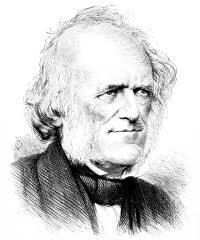
Portrait of Sir Charles Lyell Sir Charles Lyell,  The Student's Elements of Geology

“ Triassic Mammifer.—In North-western Germany, as in England, there occurs beneath the Lias a remarkable bone breccia. It is filled with shells and with the remains of fishes and reptiles, almost all the genera of which, and some even of the species, agree with those of the subjacent Trias. This breccia has accordingly been considered by Professor Quenstedt, and other German geologists of high authority, as the newest or uppermost part of the Trias. Professor Plieninger found in it, in 1847, the molar tooth of a small Triassic mammifer, called by him Microlestes antiquus. ”
Source: Gutenberg

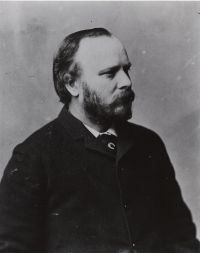
John Allen Howe,  1911 Encyclopædia Britannica (1911)

“ Life of the Triassic Period.—The plant life of this period exhibits on the whole a closer relationship with the Jurassic than with the preceding Palaeozoic formations. Flowering plants are unknown in the Triassic deposits and the dominant forms are all gymnosperms, the prevailing types being ferns and fern-like plants, cycadeans, conifers and equisetums. ”
Source: Wikisource

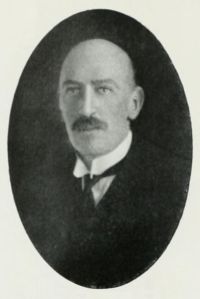
Portrait of Samuel Wendell Williston Samuel Wendell Williston,  Water Reptiles of the Past and Present (1914)

“ It is an interesting fact in the history of the vertebrates, as of all other groups of animals and plants, that the chief divisions arose early in geological history. Every known order of amphibians and reptiles, unless it be that including the blind-worms, was differentiated by the close of the Triassic period. The frogs are now known from the Jurassic. The mammals and birds also quite surely date their birth from the Triassic. And this early differentiation of the chief groups is doubtless due to the fact that the potentialities of diverse evolution are limited by specialization. ”
Source: Gutenberg

Get perspective with Kwize: daily news enlightened by great literature