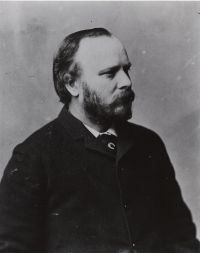
Samuel Wendell Williston

Samuel Wendell Williston

Summary

Portrait of Samuel Wendell Williston Samuel Wendell Williston Water Reptiles of the Past and Present (1914)

With a fuller knowledge of the life of the past we know that evolution has been continuous and uninterrupted; possibly accelerated or retarded at times, but without break. Were the earth’s history to be written anew, with our present knowledge, and with an unbiased mind, it is very doubtful whether many of the time divisions would have the same limits that they have now—whether the Paleozoic would terminate with the Carboniferous, or the Permian, or the Trias, or whether indeed we should think it necessary to make any primary divisions whatsoever.
Source: Gutenberg

Portrait of Samuel Wendell Williston Samuel Wendell Williston Water Reptiles of the Past and Present (1914)

ADAPTATION OF LAND REPTILES
TO LIFE IN THE WATER
In the never-ceasing struggle for existence all forms of life upon the earth, whether consciously or unconsciously, are continuously striving for improvement; striving to flee from adverse environments, or to adapt themselves better to those which must be endured; to escape their enemies, or to find means whereby they may withstand them; to find more or better food, or to prevent others from despoiling them of what they have. There is always more or less of unrest, more or less of discontent, if such terms may be used of the lower organisms.
Source: Gutenberg

Portrait of Samuel Wendell Williston Samuel Wendell Williston Water Reptiles of the Past and Present (1914)

It is in the limbs that most extraordinary differences from all other animals are seen. So great are these differences that it has been a puzzle to naturalists to understand how they could have arisen. In no other animals above the fishes, that is, in no other reptiles, in no amphibians, birds, or mammals, are there ever more than five fingers or five toes, the number with which air-breathing animals began. Fingers and toes may be lost and often are lost in all groups of life, until a single one in each limb may remain, as in the domestic horse.
Source: Gutenberg

Get perspective with Kwize: daily news enlightened by great literature