Phylogeny

Definition and stakes

Popular Science Monthly (1879)

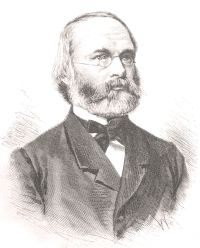
“ The present treatise, devoted to anthropogeny, is divided into two parts: the first, ontogeny, or the history of individual human organisms, concerns itself chiefly with germ history or embryology; and the second, on phylogeny, is a history of the evolution of the various animal forms, from which man has descended in the course of countless ages. Phylogeny is thus a history of evolution, and embraces the sub-sciences of paleontology and genealogy. ”
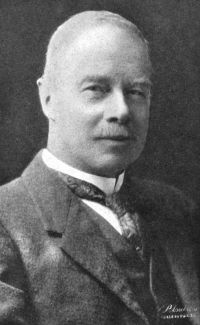
Source: Wikisource

Evolution in Modern Thought

“ I had endeavoured to show in 1874, in the first chapter of my Anthropogenie, [136] that this fundamental law of organic evolution holds good generally, and that there is everywhere a direct causal connection between ontogeny and phylogeny. "Phylogenesis is the mechanical cause of ontogenesis;" in other words, "The evolution of the stem or race is—in accordance with the laws of heredity and adaptation—the real cause of all the changes that appear, in a condensed form, in the development of the individual organism from the ovum, in either the embryo or the larva." ”
Source: Gutenberg

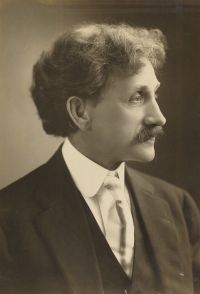
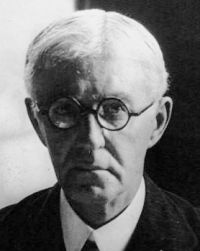
Portrait of George Vernon Hudson George Vernon Hudson,  New Zealand Moths and Butterflies… (1898)

“ From a further consideration of the foregoing principles it will be seen that all existing species are held to be descended by true generation from pre-existing species, and that, consequently, all the relationships we observe between species are explained by community of origin. The most natural system of classification is, therefore, that which best reveals the scheme of descent, or, as it is termed, the phylogeny, of the group of organisms classified. ”
Source: Wikisource

Get perspective with Kwize: daily news enlightened by great literature