Phylogenetics

Definition and stakes

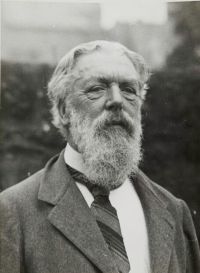
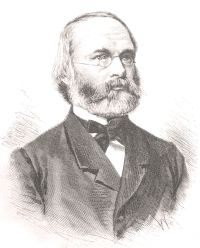
Portrait of Ernst Haeckel Ernst Haeckel,  The Evolution of Man

“ We have seen, in studying the evolution of the body as a whole, that phylogeny casts a light over the darker paths of ontogeny, and that we should be almost unable to find our way in it without the aid of the former. We shall have the same experience in the study of the organs in detail, and I shall be compelled to give simultaneously their ontogenetic and phylogenetic origin. The more we go into the details of organic development, and the more closely we follow the rise of the various parts, the more we see the inseparable connection of embryology and stem-history. ”
Source: Gutenberg

Alfred B. Rendle, Arthur G. Tansley, Joseph R. Green, Charles E. Moss, Harold W. T. Wager, Sydney H. Vines, and William T. Thiselton-Dyer,  1911 Encyclopædia Britannica (1911)

“ The introduction of the phylogenetic factor has very much increased the difficulty of determining homologies; for the data necessary for tracing phylogeny can only be obtained by the study of a series of allied, presumably ancestral, forms. One of the chief difficulties met with in this line of research, which is one of the more striking developments of modern morphology, is that of distinguishing between organs which are “reduced,” and those which are really “primitive.” The object of the phylogenetic study of any organ is to trace it back to its primitive form. ”
Source: Wikisource

Henry Fairfield Osborn,  1911 Encyclopædia Britannica, Volume 20… (1911)

“ Both laws were of paramount importance, as direct evidence of Darwin’s theory of descent, which, it will be remembered, was at the time regarded merely as an hypothesis. Nevertheless, the tracing of phylogeny, or direct lines of descent, suddenly began to attract far more interest than the naming and description of species.
The Law of Recapitulation. Acceleration. Retardation.—This law, that in the stages of growth of individual development (ontogeny) , an animal repeats the stages of its ancestral evolution (phylogeny) was, as we have stated, anticipated by d’Orbigny.
”
Source: Wikisource

Get perspective with Kwize: daily news enlightened by great literature