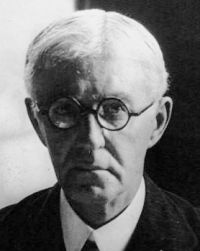
Peter Chalmers Mitchell

Peter Chalmers Mitchell

Summary

Portrait of Peter Chalmers Mitchell Peter Chalmers Mitchell 1911 Encyclopædia Britannica, Volume 10… (1911)

Evolution, or development, is, in fact, at present employed in biology as a general name for the history of the steps by which any living being has acquired the morphological and the physiological characters which distinguish it. As civil history may be divided into biography, which is the history of individuals, and universal history, which is the history of the human race, so evolution falls naturally into two categories—the evolution of the individual (see Embryology) and the evolution of the sum of living beings.
Source: Wikisource

Portrait of Peter Chalmers Mitchell Peter Chalmers Mitchell 1911 Encyclopædia Britannica, Volume 10… (1911)

Yet while, in its application to history, Hegel’s theory of evolution has points of resemblance with those doctrines which seek to explain the world-process as one unbroken progress occurring in time, it constitutes on the whole a theory apart and sui generis. It does not conceive of the organic as succeeding on the inorganic, or of conscious life as conditioned in time by lower forms. In this respect it resembles Leibnitz’s idea of the world as a development; the idea of evolution is in each case a metaphysical as distinguished from a scientific one.
Source: Wikisource

Portrait of Peter Chalmers Mitchell Peter Chalmers Mitchell 1911 Encyclopædia Britannica, Volume 10… (1911)

Quoique mon unique objet dans cet article n’ait été que de traiter de la cause physique de l’entretien de la vie des êtres organiques, malgré cela j’ai osé avancer en débutant, que l’existence de ces êtres étonnants n’appartiennent nullement à la nature; que tout ce qu’on peut entendre par le mot nature, ne pouvoit donner la vie, c’est-à-dire, que toutes les qualités de la matière, jointes à toutes les circonstances possibles, et même à l’activité répandue dans l’univers, ne pouvaient point produire un être muni du mouvement organique, capable de reproduire son semblable, et sujet à la mort.
Source: Wikisource

Get perspective with Kwize: daily news enlightened by great literature