Summary

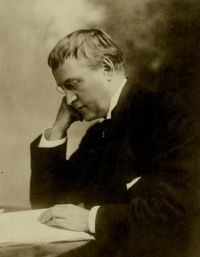
Portrait of Henry T. Finck Henry T. Finck Romantic Love and Personal Beauty

What folly, indeed, to love such a girl! What fascinates you is simply the mysterious brilliancy of her coal-black eyes—of which you may find ten thousand duplicates in Italy or Spain. Don’t you see that no flashes of wit are ever mirrored in those eyes? that, though beautiful, they are soulless, like a black pansy? that they look at one person as at another, incapable of expressing shades and modulations of tender emotion, because the soul of which they are the windows has never been, and never will be, moved by Love?
Source: Gutenberg

Portrait of Henry T. Finck Henry T. Finck Romantic Love and Personal Beauty

That Love is transient is most fortunate, for it is, in its truest and most ardent form, such a consuming fever, that the strongest man would not be able to endure its mingled ecstasies and anguish more than a few years. The lover’s fancies are his only food; coarser nourishment he scorns; he loses his appetite, and becomes “pale and interesting”—to women, who like to see a powerful man thus wincing under their superior might, and melting away before their radiant beauty.
Yet its transitoriness detracts not in the least from the magic and the charm of Love.
Source: Gutenberg

Portrait of Henry T. Finck Henry T. Finck Romantic Love and Personal Beauty

It takes genius to fully appreciate genius; it takes a refined taste to appreciate refined beauty. This is what the savage lacks.
Look at any one of the fine arts. Why does the savage prefer his monotonous drumming and ear-piercing war-songs to a soft, beautiful, dreamy Chopin nocturne? Because he cannot understand the nocturne.
Why does he prefer his painted, clumsy, coarse-featured squaw to a civilised woman with delicate contours, refined features, graceful gait? Because he does not understand the beauty of the latter. It is too subtle for his coarse nerves, his feeble imagination.
Source: Gutenberg

Get perspective with Kwize: daily news enlightened by great literature