Summary

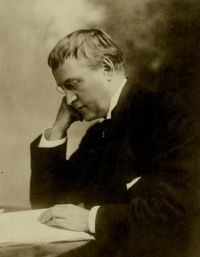
Portrait of Henry T. Finck Henry T. Finck Primitive Love and Love-Stories

The emotions of a husband are those of a mariner who has entered into the calm harbor of matrimony with his treasure safe and sound, while the romantic lover is as one who is still on the high seas of uncertainty, storm-tossed one moment, lifted sky-high on a wave of hope, the next in a dark abyss of despair. It is indeed lucky that conjugal affection does differ so widely from romantic love; such nervous tension, doubt, worry, and constant friction between hope and despair would, if continued after marriage, make life a burden to the most loving couples.
Source: Gutenberg

Portrait of Henry T. Finck Henry T. Finck Primitive Love and Love-Stories

What could be more fanciful and romantic than her shy reserve and coldness when she is longing to throw herself into the lover's arms? Is not her proud belief that her lover—probably as commonplace and foolish a fellow as ever lived—is a hero or a genius a romantic exaggeration? Is not the lover's purity of imagination, though real as a feeling, a romantic illusion, since he craves ultimate possession of her and would be the unhappiest of mortals if she went to a nunnery, though she promised to love him always?
Source: Gutenberg

Portrait of Henry T. Finck Henry T. Finck Primitive Love and Love-Stories

In face of her, the strongest of all impulses—selfishness—is annihilated. The lover is no longer "number one" to himself; his own pleasures and comforts are ignored in the eager desire to please her, to show her gallant attentions. To save her from disaster or grief he is ready to sacrifice his life. His cordial sympathy makes him share all her joys and sorrows, and his affection for her, though he may have known her only a few days—nay, a few minutes—is as strong and devoted as that of a mother for the child that is her own flesh and blood.
Source: Gutenberg

Get perspective with Kwize: daily news enlightened by great literature