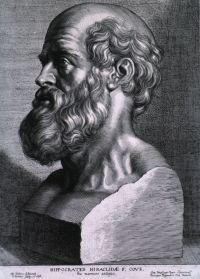
John Stewart Milne

Biographical details

John Stewart Milne Surgical Instruments in Greek and Roman Times

The cautery is nearly always spoken of as made of iron. Bronze becomes too soft to act well as a cautery, so that even the earliest references to the cautery in the authentic Hippocratic writings refer to cauteries as ‘the irons’ (σιδήρια) . It is true, of course, that in special cases bronze was used—and Priscianus recommends a cautery of gold or silver for stopping haemorrhage from the throat (Logicus, xxii) —but iron was the usual thing, and in spite of the enormous numbers of cauteries which must have existed only a very few have come down to us, as the iron has perished.
Source: Gutenberg

John Stewart Milne Surgical Instruments in Greek and Roman Times

Rare as the combination of an antique forceps with another instrument is, we have one example of the combination of a rugine and a forceps, and, as it is admirably adapted for the extraction of nasal polypus, I think we are quite justified in considering it to be the instrument indicated by Paul. This instrument was found in the grave of the Paris surgeon. It is elegantly formed and is of one piece of bronze sawn down the middle. The upper part is surmounted by a rugine strongly curved, pointed at the tip and cutting on one edge. The rugine measures 3 cm.
Source: Gutenberg

John Stewart Milne The apparatus used by the Greeks and Romans in the setting of fractures and the reduction of… (1909)

When the patient is suspended a person properly instructed and not weak, having introduced his arm between his thighs is to place his forearm between the perineum and the dislocated head of the femur, and then, having joined the other hand to the one thus passed through the thighs, he is to stand by the side of the suspended patient and suddenly suspend and swing himself in the air as perpendicularly as possible.
In fracture of the humerus, if the bone be set while the elbow is extended, the muscles of the arm will assume a different position when the elbow is flexed.
Source: Gutenberg

Get perspective with Kwize: daily news enlightened by great literature