Ligature

Definition and stakes

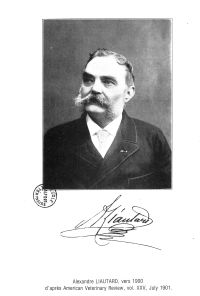
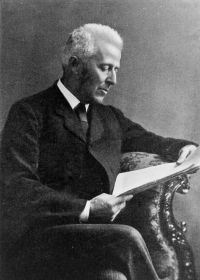
Portrait of Alexandre François Augustin Liautard Alexandre François Augustin Liautard,  Animal Castration

“ The ligature may be either of twine, silk, or elastic cord. We have ourselves operated by this method in the successful removal of growths [97] of very considerable size. So long as the upper portion of the cord, which retains its healthy structure, can be reached, the application of the ligature is attended with no difficulty, the manipulations required being similar to those which attend the removal of all growths by the process of ligation. ”
Source: Gutenberg

Various,  The Harvard Classics Volume 38

“ In the latter instances, all afflux of nutriment and heat being prevented by the ligature, we see the testes and large fleshy tumours dwindle, die, and finally fall off.
Ligatures of medium tightness I regard as those which compress a limb firmly all round, but short of pain, and in such a way as still suffers a certain degree of pulsation to be felt in the artery beyond them. Such a ligature is in use in blood-letting, an operation in which the fillet applied above the elbow is not drawn so tight but that the arteries at the wrist may still be felt beating under the finger.
”
Source: Gutenberg

Roswell Park,  The Evil Eye, Thanatology, and Other Essays

“ It is not worth while to try to even epitomize here to-day the history of the ligature; though while its introduction has been widely credited to Paré, you must not forget that it was in use many centuries before his time, and was frequently mentioned by the early writers. What Paré really did was, first, to abolish a barbarous and unscientific method of dealing with hemorrhage, and then to re-introduce or promote the employment of the ligature as a far preferable substitute, more humane, more clean, and more desirable. ”
Source: Gutenberg

Get perspective with Kwize: daily news enlightened by great literature