Bladder

Definition and stakes

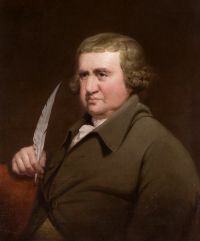
Portrait of Robert James Culverwell Robert James Culverwell,  Porneiopathology

“ To enter into a description of the pathological condition of the bladder in the several states of irritability, paralysis, and inflammation, would be to swell this article to an inordinate length, and serve no useful purpose—the symptoms and treatment comprising the most essential knowledge for the patient to possess. It may be briefly stated, that the bladder is less subject to become disorganized (the function being chiefly the disordered symptom) , and sooner even regains its tone than other organs not less important to life. ”
Source: Gutenberg

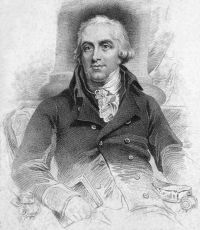
Portrait of George M. Gould George M. Gould,  Anomalies and Curiosities of Medicine

“ Anomalies of the Bladder.—Blanchard, Blasius, Haller, Nebel, and Rhodius mention cases in which the bladder has been found absent and we have already mentioned some cases, but the instances in which the bladder has been duplex are much more frequent. Bourienne, Oberteuffer, Ruysch, Bartholinus, Morgagni, and Franck speak of vesical duplication. There is a description of a man who had two bladders, each receiving a ureter. Bussiere describes a triple bladder, and Scibelli of Naples mentions an instance in a subject who died at fifty-seven with symptoms of retention of urine. ”
Source: Gutenberg

Anna M. Galbraith,  The Four Epochs of Woman's Life…

“ Bladder Symptoms.— If there is any irritability of the bladder, any scalding on urination, or a very great frequency of emptying the bladder in the early months of pregnancy, a physician should be consulted at once; in the last months of pregnancy there is a desire to evacuate the bladder frequently, and sometimes at the last there is an incontinence of urine, which is due to the descent of the uterus and the great pressure on the bladder ”
Source: Gutenberg

Get perspective with Kwize: daily news enlightened by great literature