Summary

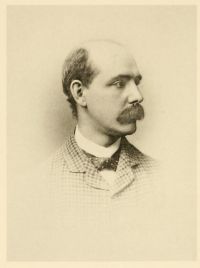
Portrait of Arthur Humble Evans Arthur Humble Evans The Cambridge natural history, vol…

The bulky flattish pile of sticks and turf, lined with moss, grass, or seaweed, is invariably placed near water, and contains three, or rarely four, whitish eggs, beautifully blotched or overspread with dark brown, crimson, or claret-colour, varied with orange, buff or grey, New World specimens being usually duller. Surface-swimming fish form the food, and magnificent indeed is the spectacle when an Osprey, after poising itself vertically aloft, descends with terrific dash and splashing plunge to rise again with its captured prey grasped in its roughened toes.
Source: Gutenberg

Portrait of Arthur Humble Evans Arthur Humble Evans The Cambridge natural history, vol…

The note is, according to circumstances, a loud harsh whistle or a soft flute-like sound; but Nyctiornis utters a deep croak, ending in a churring noise, puffing out the gular plumes meanwhile and nodding the head up and down. The birds are not ordinarily noisy. It is when hawking in the air that the brilliant colours are most strikingly displayed, the snap of the bill being at such times distinctly audible; insects are also picked off the backs of cattle, and, more rarely, captured on the ground; while Merops philippinus, and no doubt other species, bruise their prey against their perch.
Source: Gutenberg

Portrait of Arthur Humble Evans Arthur Humble Evans The Cambridge natural history, vol…

The habits in confinement, however, make it somewhat doubtful whether the bird is as nocturnal as is asserted, for in the daytime it is quick and lively in its motions, chasing its fellow-captives, dancing round with the tip of its outspread wing or tail held fast in its bill, tossing about dry leaves or pieces of paper, spreading out its wings and thrusting its beak into the ground, kicking with its legs, and finally tumbling about as if in a fit.
Source: Gutenberg

Get perspective with Kwize: daily news enlightened by great literature