Summary

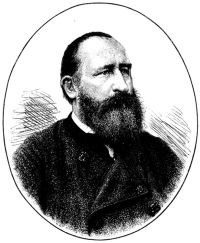
Portrait of Alfred Edmund Brehm Alfred Edmund Brehm Cassell's book of birds; vol. 3

When arrived before a thicket of these in full bloom, he poises or suspends himself on wing for the space of two or three seconds so steadily that his wings become invisible or only like a mist, and you can plainly distinguish the pupil of his eye looking round with great quickness and circumspection; the glossy golden green of his tail and the fire of his throat dazzling in the sun form altogether a most beautiful appearance. When he alights, which he frequently does, he always prefers the dry twigs of a tree or bush, where he dresses and arranges his plumage with great dexterity.
Source: Gutenberg

Portrait of Alfred Edmund Brehm Alfred Edmund Brehm Cassell's book of birds; vol. 3

Here, after perhaps many battles have been fought and rivals vanquished, the noble, full-dressed Black Cock takes his stand, commencing at the first dawn of day, and where game is abundant, the hill on every side repeats his humming call; he struts round the spots selected, trailing his wings, inflating his throat and neck, and puffing up the plumage of these parts and the now brilliant wattle above the eyes, raising and expanding his tail and displaying the beautifully contrasting white under tail-covers.
Source: Gutenberg

Portrait of Alfred Edmund Brehm Alfred Edmund Brehm Cassell's book of birds; vol. 3

The call of the Monauls is a loud, plaintive whistle, which is often heard in the forest at daybreak or towards evening, and occasionally at all hours of the day. In severe weather, numbers may be heard calling in different quarters of the wood before they retire to roost. The call has rather a melancholy sound, or it may be that as the shades of a dreary winter's evening begin to close on the snow-covered hills around, the cold and cheerless aspect of nature with which it seems in unison make it appear so.
Source: Gutenberg

Get perspective with Kwize: daily news enlightened by great literature