Summary

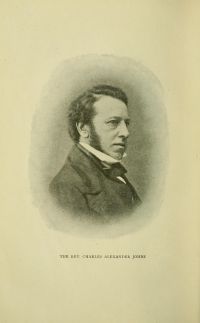
Portrait of C. A. Johns C. A. Johns British Birds in Their Haunts

The gentle, innocent, confiding, little brown bird, which creeps like a mouse through our garden flower-beds, picks up a meagre fare in our roads and lanes, builds its nest in our thorn hedges, and though dingy itself, lays such brilliant blue eggs, has been known to us from our infancy as a 'Hedge Sparrow', and we decline any innovation: the name is a time-honoured one, and no one will mistake us. Hedge Accentor, Hedge Warbler, and Shuffle-wing, are names open to those who prefer them, but we adhere to the old-fashioned designation of Hedge Sparrow.
Source: Gutenberg

Portrait of C. A. Johns C. A. Johns British Birds in Their Haunts

Elevated on the high dead limb of some gigantic tree, that commands a wide view of the neighbouring shore and ocean, the great White-headed Eagle seems calmly to contemplate the motions of the various feathered tribes that pursue their busy vocations below. High over all these hovers one whose actions instantly arrest all his attention. By his wide curvature of wing, and sudden suspension in air, he knows him to be the Fish Hawk settling over some devoted victim of the deep. His eye kindles at the sight, and balancing himself with half-open wings on the branch, he watches the result.
Source: Gutenberg

Portrait of C. A. Johns C. A. Johns British Birds in Their Haunts

The character of the Partridge's flight is familiar to most people. Simultaneously with the startled cry of alarm from the cock comes a loud whirr-r-r as of a spinning-wheel: away fly the whole party in a body, keeping a horizontal, nearly straight line: in turns each bird ceases to beat its wings and sails on for a few yards with extended pinions; the impetus exhausted which carried it through this movement, it plies its wings again, and if it have so long escaped the fowler, may, by this time, consider itself out of danger, for its flight, though laboured, is tolerably rapid.
Source: Gutenberg

Get perspective with Kwize: daily news enlightened by great literature