Derbyshire

Definition and stakes

S. C. Hall The Stately Homes of England

The poet, the novelist, the traveller, the naturalist, the sportsman, and the antiquary have found appropriate themes in Derbyshire, in its massive rocks—“Tors”—and deep dells; its pasture-lands on mountain-slopes; its rapid, yet never broad, rivers—delights of the angler; its crags and caves; its rugged and ragged or wooded steeps; above all, its relics of the earlier days when Briton, Roman, Saxon, and Norman, held alternate sway over the rich lands and prolific mines of this lavishly endowed county
Source: Gutenberg

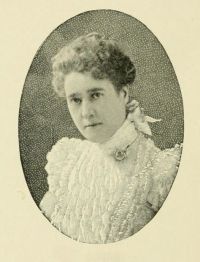
Portrait of Eleanor McCutcheon Talmage Eleanor McCutcheon Talmage T. De Witt Talmage as I Knew Him

In this part of my daughter's diary I read:—
"It was a most beautiful drive. Derbyshire is called the Switzerland of England. The hills were quite high and beautifully wooded, and our drive lay along the river's edge—a brook we would call it in the States, but it is a river here—and winds in and out and through the fields and around the foot of the highest hill of all, called the Peak of Derbyshire. We passed picturesque little farmhouses, built of square blocks of rough, grey stone covered with ivy. We drove between hawthorn hedges, through beautiful green fields and orchards.
Source: Gutenberg

Memorials of old Derbyshire (1907)

Edward I. visited Derbyshire in 1275, tarrying both at Ashbourne and Tideswell, when on his way to North Wales. In the subjugation of Wales, various of the great landholders of Derbyshire, with their tenants, took a [12] prominent part; among them were William de Ferrers, William de Bardolf, Henry de Grey, Edward Deincourt, John de Musard, and Nicholas de Segrave.
Between 1290 and 1293 the King was frequently in the county, coming on more than one occasion for sport amongst the fallow deer of Duffield Frith, at the forest lodge of Ravensdale.
Source: Gutenberg

Get perspective with Kwize: daily news enlightened by great literature