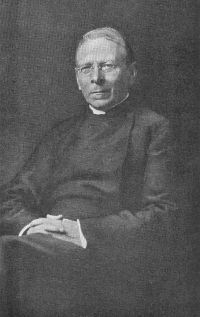
J. Charles Cox

Biographical details

J. Charles Cox English monasteries (1904)

When undoubted monastic evils come to light through visitations, they bring to mind a graphic story that was a favourite pulpit illustration of that saintly French parish priest of last century, the Curé d’Ars, showing the fierce and persistent temptations that beset the earnest strivers. A hermit, who doubted of the reality of the powers of darkness, had a prayer granted that he might for one day be able to see these hidden forces.
Source: Gutenberg

J. Charles Cox English monasteries (1904)

All monastic custumals lay down the most careful directions as to the duties of the almoner. “Every conventual almoner,” says one English mediæval writer, “must have his heart aglow with charity; his pity should know no bounds, and he should possess the love of others in a most marked degree; he must show himself as the helper of orphans, the father of the needy, and as one who is ever ready to cheer the lot of the poor and help them to bear their hard life.”
Source: Gutenberg

J. Charles Cox English monasteries (1904)

Those most competent to judge have no hesitation in believing that the various orders of religious men and women of the Roman communion in this country are doing an inestimable service—educational, charitable, and spiritual—to those of their own faith. Our best literary critics recognise too the genuine work that not a few are doing in elucidating history, and in other ways adding to the general sum of human knowledge; whilst all Englishmen can well afford to be proud of the attainments and researches of Dr. Gasquet, the abbot-president of the English Benedictines.
Source: Gutenberg

Get perspective with Kwize: daily news enlightened by great literature