“ To one historian an inhuman embodiment of cruelty and vice, to another a superhuman incarnation of courage, wisdom and strength of will, Henry VIII. has, by an almost universal consent, been placed above or below the grade of humanity. So unique was his personality, so singular his achievements, that he appears in the light of a special dispensation sent like another Attila to be the scourge of mankind, or like a second Hercules to cleanse, or at least to demolish, Augean stables. ”
Henry VIII
Definition and stakes
Henry VIII, a collaborative history play by William Shakespeare and John Fletcher, dramatizes the reign of England’s sixth monarch, focusing on his political machinations, marital turmoil, and rupture with the Roman Catholic Church. The work, alternatively titled All Is True, merges historical events with dramatic freedom, distinguished by intricate stage directions and a prologue that presents the narrative as both chronicle and ethical inquiry.
Historians and playwrights have long debated Henry’s legacy: Pollard contrasts his perceived cruelty with his “superhuman” determination, while Ranke emphasizes how his personal ambitions altered England’s course. Gasquet underscores the monarch’s role in dismantling monasteries, portraying his reign as a turning point between tradition and transformation. The play’s lasting appeal lies in its depiction of a ruler whose contradictions—both tyrant and reformer—mirror the volatile emergence of a nation’s identity.
Quotes about “Henry VIII”
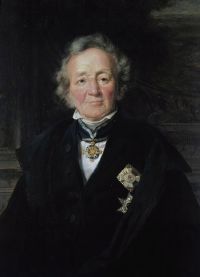 Leopold von Ranke,
A history of England principally in the seventeenth century…
Leopold von Ranke,
A history of England principally in the seventeenth century…
“ Under no dynasty in the world have great national changes been so dependent on the personal aims of princes as in England under the Tudors. Just as all Henry VIII's subsequent proceedings were determined by the affair of the divorce, so also the policy of his three children was due to the relations into which they were thrown by their birth.No one however could derive the course of English history at this epoch from this cause alone. How could Henry VIII have even thought of detaching his kingdom from the Roman See, but for the ancient and deep-seated national opposition to its encroachments? ”
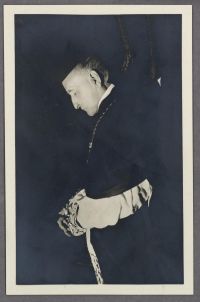 Francis Aidan Gasquet,
Henry VIII and the English Monasteries
(1906)
Francis Aidan Gasquet,
Henry VIII and the English Monasteries
(1906)
“ When Henry VIII succeeded his father, every man of thirty must have had within his own personal recollection some knowledge of the terrible war, whilst his parents must have lived through the whole of it. The obvious result of a knowledge of the danger and troubles of this long civil war, whether derived from personal experience or the relation of parents, was a willingness to hazard everything rather than recur to such a period of distress and bloodshed. Periods of revolution inspire peculiar prudence, and protracted war a determination at all costs to cling "to peace and pursue it." ”