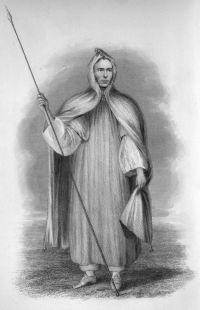
North Africa, a region spanning the Mediterranean and the Sahara, has long fascinated writers with its distinctive combination of geography, culture, and history. Authors such as M. F. Mansfield highlighted its symbolic clothing, the burnous, as a unifying feature across different social classes, while George Edward Woodberry described it as a "vast triangular island" enclosed by sea and desert.
Élisée Reclus focused on its function as a transitional area between Europe and Asia, pointing out its unique climatic and biological boundaries. Heinrich Barth examined its cultural diversity, tracing Semitic origins and mixtures, and Madison Grant connected its populations to Mediterranean racial backgrounds. These differing viewpoints together highlight North Africa’s lasting importance as a meeting point of civilizations, shaped by both natural obstacles and human exchanges.