Summary

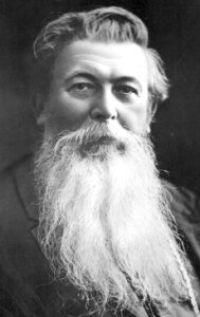
Portrait of Alexandre Le Roy Alexandre Le Roy Catholic Encyclopedia (1913) — Africa (1913)

The Mussulman who becomes a Christian must renounce, not only his faith, but also his family, his social standing, his interests, all that binds him to the world. Hence it is evident how utterly mistaken those are who may have held that Islam is a kind of useful, possibly necessary, transition, between Fetishism and Christianity. On the contrary, Islam as it were crystallizes the heart and mind of man. It is not a step taken upward, but a wall that arrests all progress. From a philosophical and religious standpoint, however, Islam is undoubtedly superior to the Fetishism of the negro.
Source: Wikisource

Portrait of Alexandre Le Roy Alexandre Le Roy Catholic Encyclopedia (1913) — Africa (1913)

Islam, therefore, imposes itself by force, by persuasion, by interest, by alliances, by the spirit of imitation, by fashion. It should be added that there is a real affinity between the manners and customs of the Moors and Arabs and those of the more or less mixed populations of northern Africa; and between these and the negro tribes. Moreover, Mussulman exclusiveness becomes not a little modified by contact with Fetishism, and if Islam imposes certain beliefs and practices on its black disciples, they, in turn, bring into it a number of their superstitions and usages.
Source: Wikisource

Portrait of Alexandre Le Roy Alexandre Le Roy Catholic Encyclopedia (1913) — Africa (1913)

There is no doubt that there is to be found among the nations of Africa, apart from Christianity and Mohammedanism, a religion, a belief in a higher, living, and personal principle, implying on man's part the duty of recognizing it by means of some kind of worship. Individuals, families, and even communities may doubtless be found in Africa, as elsewhere, utterly, or almost, devoid of all notion of religion and morality.
Source: Wikisource

Get perspective with Kwize: daily news enlightened by great literature